Monday, May 30, 2016

Review - Resolution by Robert B. Parker

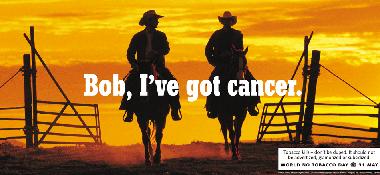
Resolution is a story about rugged, dusty, sharpshooting, whiskey-loving manly men doing manly-men things such as shootin' and talking 'bout shootin', and then shootin' som'more. These men are too busy managing their testosterone to have emotions, too deep in the heart of Marlboro Country to make full sentences. They are macho.


Okay, now on with the real review.

Resolution is a western, not a genre I typically read (unless we go back to when I was around 9 and in love with The Oregon Trail and everything western). I bought this book on a whim in a used book store. It turns out it's the second novel starring the characters Everett Hitch and Virgil Cole, the first one being Appaloosa. I haven't read Appaloosa but that wasn't a problem.


The very first page of the novel made me think of the wonderful online group Critique Circle and its infamous Hook Queue, where, only once a month, members have the chance to anonymously critique (savagely tear apart) the opening hook to the pieces submitted.

Just have a look at the entire first page from the novel and, if you're acquainted with the Hook Queue, tell me if it would survive.

  I was in the Blackfoot Saloon in a town called Resolution, talking with the man who owned the saloon about a job. The owner was wearing a brocade vest. His name was Wolfson. He was tall and thin and sort of spooky-looking, with a wall-eye.
  "What's your name?" Wolfson said.
  "Hitch," I said. "Everett Hitch."
  "How long you been in Resolution?" Wolfson said.
  We were at the far end of the big mahogany bar, sipping whiskey that I had bought us.
  "'Bout two hours," I said.
  "And you come straight here?" Wolfson said.

I have to admit I said "Oh, crap" when I read that opening scene. Fortunately, the story picks up immediately and we are whisked away to the brand new town of Resolution, where our main character is hired as a gunman for the town saloon.

Despite the choppy and curt style (it's Hitch's point of view, after all), and the ubiquitous "said," the unceasing action--however small--in each short chapter was enough to keep my attention and make me read just a little bit more. By the time I decided to stop I had already reached page 100.

That's probably the best thing about this novel: the chapters are short and focused on one scene.

More characters are introduced as the story progresses, and a main conflict also rears its ugly head: Wolfson wants to claim ownership of everything: the town, the surrounding land, the mine--and all at the expense of the current homesteaders.

Hitch is soon joined by his comrade Virgil Cole, and both end up doing Wolfson's dirty work, even though it goes against their ideals. It was interesting to see two tough western men doing things they didn't agree with, and all for a paycheck. I spent many chapters wondering when their patience would run out and they would turn on Wolfson.

But then the ending came and went without glory. I spoil it for you at the very bottom of this review, so you can have a look at it if you want.

As for the style, the conversations throughout the book had me sniggering more than once. Every spoken line is floating in its own little puddle of testosterone.

And not only that, but practically every line has "he said" nestled in it. After a few pages, I automatically skipped over the dialogue tags, and thank goodness I did because it would have driven me insane (as some Goodreads reviewers complained). Usually, we writers are urged to use "said" as a dialogue tag instead of more colorful options such as "muttered" or "shouted." Supposedly, "said" blends into the background easier.

Not here.

My God, I've never seen "said" used that many times!


Dialogue was, I'd say, the worst part of the novel. In an attempt to be macho cowboy men, the characters fumble through half sentences and speak with periods even when asking straightforward questions. Sometimes it was hard to follow.

All in all, because it kept me entertained throughout, but also had cringeworthy dialogue and a disappointing resolution, Resolution receives three Pirates.


** Ending spoiler.**

Wolfson fires the main characters and hires ex-military men to control the town. The main characters arrange a meeting with Wolfson. Wolfson appears with two escorts, Virgil Cole shoots them all dead. End of conflict.

Monday, May 23, 2016

Semantic Change - Broadening - Part 2

Words constantly change meaning. It's something inevitable that happens due to usage. This process is called semantic change or shift in meaning. I posted a general explanation about this previously, and now I'm going to focus on one of the ways a word can change its meaning: broadening.

Broadening is basically a process in which a word used to refer to something specific goes on to refer to something more general. Its meaning broadens, widens, becomes more general.

In my previous post on semantic broadening, I used several brand names as examples. Names such as Kleenex or Velcro are commonly used nowadays not to refer to the specific brand, but to refer to the general object. Other words such as "escalator" or "aspirin", previously brand names, lost their trademarked status and became part of the public domain. This is yet another example of semantic broadening, and in the case of brands, "genericide."

Here are some other examples of broadening:

Guy

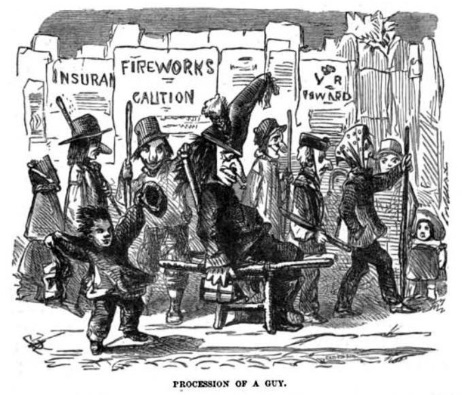
Procession of a guy.
This word nowadays refers to any male person. It originates from Guido (Guy) Fawkes, the most famous of a group of conspirators who attempted to blow up the English Houses of Parliament on November 5, 1605. This was known as the Gunpowder Plot. You might recall a little rhyme from the movie V for Vendetta mentioning this.

After Fawkes's trial and execution, Londoners began celebrating the thwarted plot each November 5 with bonfires, fireworks, and the burning of an effigy, which was called a guy (but usually represented the Pope).

During the 19th century, the word "guy" was used to refer to any oddly dressed person. In America, the word lost its pejorative connotation and came to mean any man, and that's the use we give the word today.


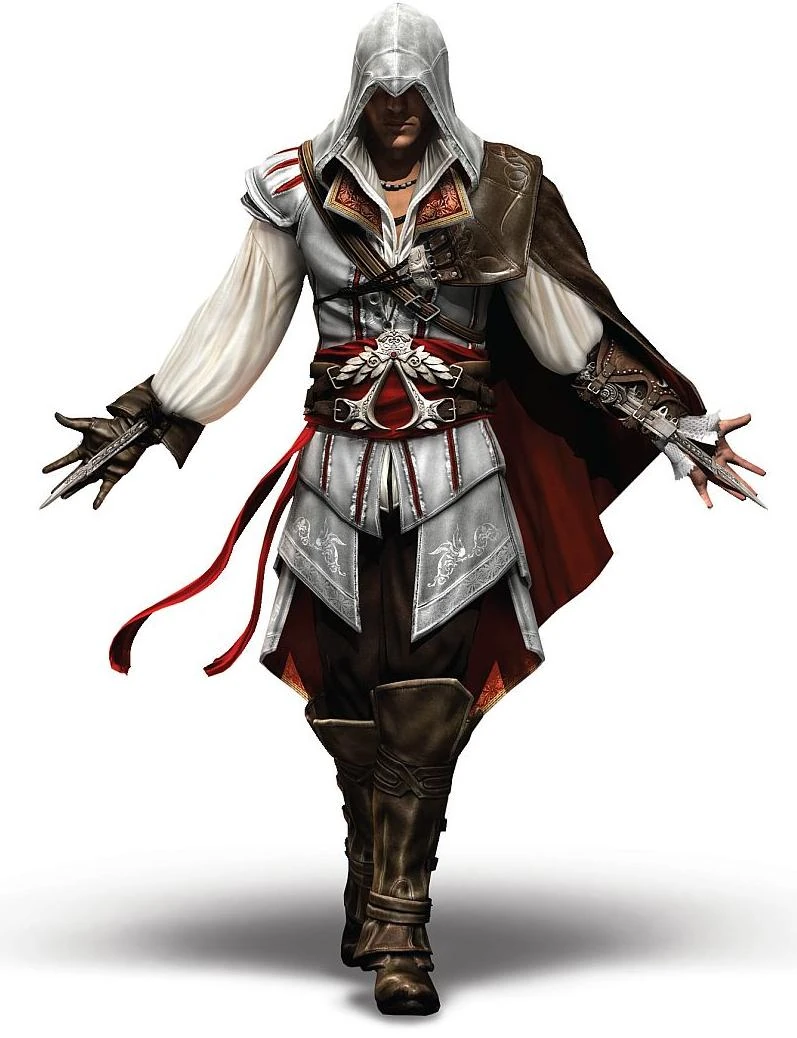
Ezio Auditore is the most
charismatic assassin ever!
Assassin

The origin of this word is as twisted as you would expect! It seems that in the eleventh and twelfth centuries there was a secretive murder cult which received the name "hashishin" meaning "hashish eaters."

This cult targeted prominent figures and also took money from contract killings. Even though their main goal was to coerce or murder, the group wasn't as bloodthirsty as you'd think. They were highly intelligent and trained killers, known for only inflicting harm on their target. They specifically took care not to harm bystanders or any innocent people who might be nearby.

Because of their assaults were focused on prominent figures, the words "assassin" and "assassinate" nowadays refer to killings of a major public figure. If an ordinary everyday person is killed, that is murder, not assassination.


Dog

The Old English word "docga" (or "dogga") is still a linguistic mystery. At the time, the word "docga" was used to refer to a specific breed of canine, but once it entered the language it gained popularity to the point that it forced out the Old English "hund" (which gave us today's "hound") and went on to mean any sort of dog disregarding its breed.

Thing

Is there a more general word than "thing"? Well, in Old English (it was "þing") the word referred to a council, meeting, assembly or discussion. It's incredible how generalized this word has become and how forgotten its origins are!

Shit

Oops! Sorry for cursing! No, not really. I honestly don't have any taboos when it comes to language because the word itself isn't inherently right or wrong; its the connotations we humans give it. So, let's talk about shit.

Originally, the word referred to fecal matter, and it still does today. However, its sense has been broadened. Have you ever heard phrases such as:

"I've had enough of her shit."
"I have so much shit to to today."

I'm sure most of you must have. In the first example, the word "shit" might refer to "problems" or "issues" or "drama" or "complaints." It's very general! In the second example, "shit" is also immensely general, meaning "things."

What's happening to the word "shit"? It's undergoing a process of generalization or broadening, but it's also on the verge of losing any meaning! When a word becomes so, so general, it risks losing its full meaning and becoming nothing more than a function word (used to express grammatical or structural relationships in a sentence) or an affix (a word element: prefix, suffix...). This process is called bleaching.


Resources

http://etmlbristol.wikia.com/wiki/Semantic_widening

http://grammar.about.com/od/ab/g/broadenterm.htm

http://www.todayifoundout.com/index.php/2012/12/where-did-the-word-assassin-come-from/

http://www.etymonline.com/index.php?term=thing&allowed_in_frame=0

http://www.etymonline.com/index.php?term=dog&allowed_in_frame=0

http://grammar.about.com/od/ab/g/broadenterm.htm

http://www.krepublishers.com/02-Journals/IJES/IJES-07-0-000-14-Web/IJES-07-3-000-14-ABST-PDF/IJES-7-3-711-14-338-Kaburise-O/IJES-7-3-711-14-338-Kaburise-O-Tx[32].pdf

Monday, May 16, 2016

Semantic Change - Broadening Part 1 - Brand Names

Semantics! Yay!

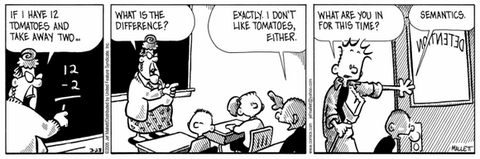
Oh, come on! It isn't that bad... Here's a comic strip to get you in the mood.


Semantic change (also called shift in meaning) is a process in which a word changes its meaning over time. It actually happens a lot more than you'd expect! There are many words which we happily toss around in our everyday conversations which started out with a completely different meaning. Let's have a look at a few words that underwent a form of semantic change called broadening.

Also called widening or generalization, the process of broadening a word's semantics means that it takes on a more general sense.

Perhaps the most obvious use of broadening is related to brand names. Over the years, we've grown accustomed to using a specific brand name to refer to a general idea or item. Can you find all the brand names here?

When Julie finished her shift at the mall, she had a massive headache and really needed an aspirin. As she got on the escalator, she remembered she had some in her backpack. She checked all the pockets--even the ones shut with Velcro--but the only things she could find were some Kleenex, ChapStick and Band-Aids.

Easy, right? The brand names are capitalized: Velcro (registered name for "hook-and-loop fastener"), Kleenex (registered name for "facial tissue" or "handkerchief"), Band-Aid (registered name for "adhesive bandage") and ChapStick (registered name for "lip balm." Note the capitalized "s" in the middle).

That looks weird, doesn't it? Especially "ChapStick"! I'm so accustomed to using it as a generic name that seeing it capitalized is a bit unnerving. But have a glimpse at the official website and, yup, it's a registered trademark.


However, there are two more trademarked names in that segment: aspirin and escalator. But why aren't they capitalized?

Well, it turns out that these words lost their trademark status.

Let's begin with the easy one:

The word "escalator" was trademarked by Otis Elevator Co. in 1900, but in the 1950 case Haughton Elevator Co. v. Seeberger, the company lost its trademark rights because the court declared it had allowed the word to become generic, meaning nothing more than "a moving staircase." Thus, the company lost its trademark and "escalator" officially became part of the public domain.

The word "aspirin" was trademarked by the well-known German pharmaceutical Bayer in the year 1899. However, at the end of World War One, many of the company's assets and trademarks were confiscated and other companies jumped at the opportunity to use the highly acclaimed name. Bayer, however, still holds trademark in over eighty countries, including Germany, Canada and Mexico.

By the way, did you know that Bayer had also trademarked "heroin"? The name of the drug is actually diacetylmorphine. However, Bayer created its brand name Heroin from the Greek word "hero" in order to associate "heroic" traits to the medicine. As you might have guessed, the company also eventually lost trademark rights over this word.

These last two examples (three if we count "heroin") of semantic broadening are also clear examples of a phenomenon called brand genericide--when a brand name becomes a common name. Otis Elevator Co. failed to properly protect its trademark over the word "escalator", and Bayer pretty much had its trademark stripped from "aspirin" after WWI.

Other companies are currently at risk of losing their trademark this way, for example "Google" with regards to the common phrase "let's google this", meaning "let's look this up on the internet."

Brand name broadening has happened many times, and probably will continue to happen throughout the decades. It's a form of dying of success: the trademarked name becomes part of your day-to-day until you disassociate it from its source (the company) and use the name solely to refer to the item. Once we've reached this point of semantic broadening or generalization, court claims can be put forward to declare the word public domain--and other companies can jump at the opportunity to use a well-known word.

So, it turns out semantic change isn't something that only affects us nerds! The evolution of language has deep and long-lasting effects on society, and phenomena such as shifts in meaning have, as we've just seen, even been dealt with in court cases.

In my next post I'll give you some examples of broadening which affected regular words we use every day.


Resources

http://etmlbristol.wikia.com/wiki/Semantic_widening

http://inventors.about.com/library/inventors/blaspirin.htm

http://www.bayer.com/en/history.aspx

http://ndrichardson.com/blog/2012/09/11/brand-genericide-when-brand-names-become-commonplace/

http://www.bbc.com/news/business-27026704

http://www.businessinsider.com/yes-bayer-promoted-heroin-for-children-here-are-the-ads-that-prove-it-2011-11?op=1
Related Posts Plugin for WordPress, Blogger...