Showing posts with label Good Book Review. Show all posts

Monday, June 13, 2016

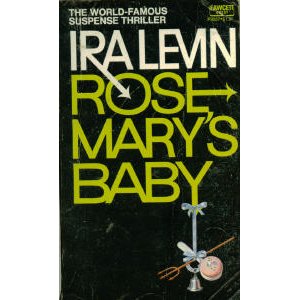
Review - Rosemary's Baby

You've probably heard of Rosemary's Baby before. The classic 1967 novel by Ira Levin was transformed into the 1968 film by director (let's keep our personal opinions aside for now) Roman Polanski. The movie has 99% on Rotten Tomatoes! The story was also made into a TV miniseries in 2014 with questionable appeal...

I personally haven't seen the movie but I've heard about it and already had a general sense of what the book would be about when a coworker offered to lend me his copy. Personally, I'm glad I didn't know too much beforehand because Rosemary's Baby was a delightfully dark read.

The story begins vanilla enough: Rosemary and Guy Woodhouse, recently married, get into the New York City apartment building they've (she's) been longing for: the Bramford. But the Bramford has a dark history of Satanists and cannibals, tee-hee! Even though Hutch, Rosemary's close friend, tries to put her off the building, Rosemary and her husband move in and begin a new life together.


Although not much happens in the first part of the novel, aside from moving in and decorating, meeting the neighbors and encountering a suicide, the matter-of-fact way Levin has of explaining Rosemary and her husband Guy's day-to-day kept me turning page after page. Of course, the action centers around Rosemary, only twenty-four years old and married to up-and-coming actor Guy Woodhouse, who is nine years her senior.

Rosemary initially came off as a naive housewife suffering from too much dependency on her husband. She parted with her religious beliefs and her family ties when she decided to marry Guy. However, as the couple meets their sketchy (and nosy!) neighbors Roman and Minnie Castevet, Rosemary's personality becomes clearer. She's not so much naive as gentle-spirited and uprooted from her natural habitat. This made for an endearing main character, who I could sympathize with up to the final page.


When Rosemary finds out she's pregnant, something she had been yearning for, her surroundings turn a shade darker and now people who seemed to be her trusted neighbors and friends look more like enemies.

In the final third of the novel, Rosemary puts all the pieces of the puzzle together and realizes exactly what is going on around her. She becomes a take-charge type of character, who is still limited by her duty to her husband and her obstetrician (who happens to be in on the entire scheme surrounding her baby).

I don't want to reveal any of the action in this review because the both the novel and the classic film have been talked about to death already, but let me just say that Rosemary's Baby was an excellent thriller--not a horror story. The ending, however, left me wanting more because the story takes a sudden sharp turn into the paranormal and opens up so many fantastic doors which we never get to cross because the novel simply ends. The last scene in the novel made my heart go out to Rosemary and truly demonstrated what a gentle soul she is.

Rosemary's Baby receives five Pirates!


Thursday, June 2, 2016

Fullmetal Alchemist - My Favorite Manga

During Christmas 2014, I made a trip to my closest FNAC to buy my husband a few Wolverine comic books, and I happened to discover a little something that stole my heart.

Fullmetal Alchemist is the story of brothers Edward and Alphonse Elric, who try to resurrect their mother using alchemy. The process fails, and Edward loses his leg whereas his younger brother Alphonse vanishes. In a desperate attempt to save his only remaining family, Edward sacrifices his arm and traps his brother's soul inside a suit of armor. Now the two embark on a quest to find the Philosopher's Stone to use its powers to recover their bodies.

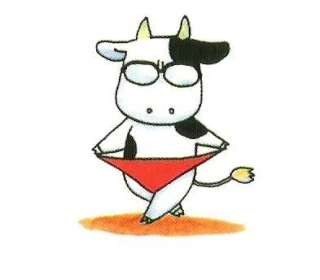
Arakawa grew up on a dairy farm,
and always portrays herself as a cow.

Written and illustrated by Hiromu Arakawa, Fullmetal Alchemist thrives on strong characters, be they male, female or androgynous (the character Envy. What the heck is he/she/it?). For me, characterization is one of the strongest points in the story. We are presented to many people (think Game of Thrones amount of people...), and we have many women--something I appreciated.

Arakawa doesn't hesitate when it comes to blood, death and disfigurement. No one is safe in Amestris, and not just that, but Arakawa manages to make you care for each and every one of them. The Elric brothers, Edward and Alphonse, make a sympathetic duo from the get-go, and all the supporting characters (especially Roy Mustang and Riza Hawkeye) have their own intricate backstories as well as their own place in the story.

The adventure begins innocently enough, and the first few adventures are lighthearted--up until we learn about human chimeras. Soon the pieces of a much darker story fall into place and the characters discover they've been pulled into the heart of a nationwide menace. The story actually goes beyond the mere adventure, and brings forth questions on the meaning of God, "Truth" and the universe.

(Read from right to left.)

There has been quite a lot of talk about the religious message embedded in Fullmetal Alchemist. From posts which claim the manga is about Buddhism, to posts which claim that the manga has both a negative and positive message on religion. I tend to agree more with the mixture of positive and negative messages, as absolutely nothing is black or white in Fullmetal Alcehmist (and that's what I love about it).

Talking about black or white, Arakawa includes several intriguing villains, based on the names of the seven deadly sins. At certain points, readers actually care for the so-called villains, feel sympathy towards them, and hope they have a happy ending. But alas, we can't have it all!

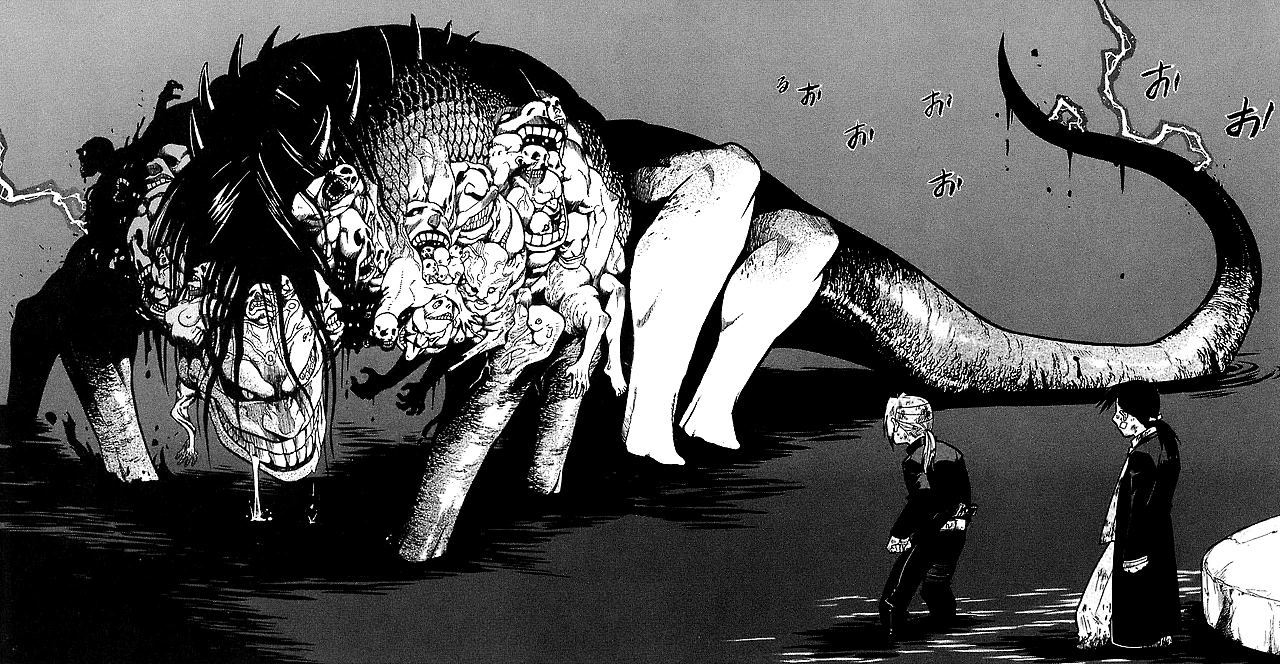
The villain Envy transforms into a grotesque creature bubbling with
the faces of the innocent souls trapped in its body.

Overall, Fullmetal Alchemist grabbed me with its open-to-interpretation philosophical viewpoint, its rich story colored with tones of grey, and its sympathetic characters. I have the Kanzenban edition, comprised of eighteen colorful volumes. I strongly recommend it to anyone with an urge to take a peek at manga. You'll soon discover why it's become an instant classic.


Thursday, May 12, 2016

Nostalgia Reading - R.L. Stine

Raise your hand if you also loved R.L. Stine as a kid!

I grew up reading Goosebumps and enjoying every moment of it! I remember going to the bookstore every month, bubbling with excitement, ready to get the latest book in the series.


Right now, I'm not sure which Goosebumps book I read first of all. I think it was The Ghost Next Door. It was the tenth book in the series, released in August 1993. From there, I went back through the list and read Say Cheese and Die! and Let's Get Invisible! and all the others.

I was hooked! I couldn't wait for the next book to come out--and they usually came out once a month or once every two months.

Shortly after turning ten, my love affair with Goosebumps guttered out.

The last Goosebumps book I read was The Scarecrow Walks at Midnight. It was released in May 1994. I still remember that day: I'd just bought the book and was at my aunt Delia's house. I sat on the big armchair in her living room and read the entire thing in about thirty minutes. Then I remember closing it and deciding that Goosebumps wasn't for me anymore.

I didn't stop reading just because of that book, though. The previous one, Deep Trouble, also wasn't all that I was expecting. The book prior to that one, Monster Blood II, involved something with a giant monster hamster... The previous one was called Why I'm Afraid of Bees. The cover showed a bee with the face of a boy... and I just wasn't feeling the love anymore. I think I actually skipped the bee one because the cover looked too silly. I was growing out of my Goosebumps phase and The Scarecrow Walks at Midnight marked the end.

Now that I think about it, I have such a strong sense of nostalgia towards these books, but if I do the math (August 1993 to May 1994), I was hooked on them for under a year! Even so, I must have read around 18 or 19 of them in total (the scarecrow one was number twenty).

I currently don't have all of the Goosebumps books I owned, but I still have most of them. I think I got rid of the ones I thought were too silly in a yard sale.

Around the time I was weaning myself off of Goosebumps, I discovered the Fear Street Saga, a trilogy set in different time periods, and I also immensely enjoyed it. The first book came out in 1993, so I must have been around nine when I began reading them.

Much darker than Goosebumps, the Fear Street Saga is a story of love, betrayal and revenge. I felt so grown-up reading it! I still have the trilogy, so last year I decided to give it a read and it holds up pretty well. The scenes aren't as vivid as I imagined them and the action seems rushed now, but I can still see the appeal.


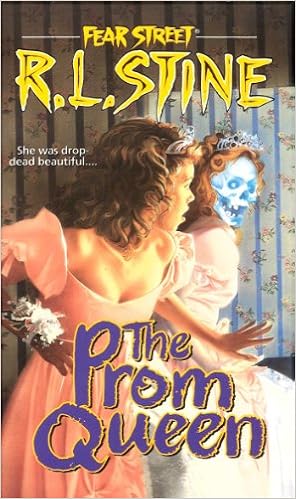
One of the last R.L. Stine books I read was The Prom Queen. I still have it so I should probably give it another read, but I remember I didn't like it all that much. I think I had matured too much by then and was looking for stronger stuff.


I think that around age ten I moved on to things like Lois Duncan's Down a Dark Hall or Daughters of Eve (I don't remember much about that second one, but I immensely enjoyed the first one), or Tad Williams' Tailchaser's Song.

I still don't know how my parents just let me get any book I wanted! Tailchaser's Song was not intended for a ten-year-old audience! But still, it's wonderful.


And now we come to present-day me, thirty-two years old and browsing through a used book store. I came across Call Waiting by R.L. Stine and immediately bought it just to have a nostalgic kick. I'd never read this one before, but I wanted to see if my favorite childhood author still lived up to my expectations.

Nope!


I'm not going to criticize the style or the simplicity (or the predictability) of the novel because I'm not its intended audience, but I will criticize one thing: sexism.

The main character is a teenage girl called Karen. We don't really get to know her except for one thing: she has a boyfriend who she's terrified of losing. Her whole life revolves around her boyfriend and her suspicions of him cheating on her with someone else. Her thoughts and her conversations are centered on her boyfriend during the entire book. We don't really get to know anything about her, no hobbies or areas of interest.

Is the guy worth all that? All we know is that he has long dark hair and that's supposed to be very sexy. He barely interacts with Karen, and when he does, he comes off as aloof and not very interested in their relationship.

Overall, Karen came off as the typical "psycho girlfriend." That's just sad. The final straw came when readers discover the "phone killer" who had made the threatening calls was another teenage girl also after the boy.

The whole story boils down to two women fighting for a man.

It's not like this sort of situation can't actually happen, but an entire book portraying teenage girls as completely dependent on boys and void of any hobby or interest other than having a boyfriend just makes me think this isn't the best kind of role model you want to give your kids.

Am I reading too much into this? Children are incredibly perceptive but they might not be able to discern good role models from bad role models. Furthermore, I believe readers usually try to identify with the main character of a novel. Is a one-dimensional and dependent main character a good example for young readers?

Thursday, April 14, 2016

Books I Love - I Am Legend by Richard Matheson

I Am Legend is one of my all-time favorite books. Key word: book. Forget about that movie. What movie? There wasn't any movie!

(Actually, this novel by Richard Matheson has not one, not two, but four film adaptations...)

Here is the book description from Goodreads:

Robert Neville is the last living man on Earth... but he is not alone. Every other man, woman and child on the planet has become a vampire, and they are hungry for Neville's blood.

By day he is the hunter, stalking the undead through the ruins of civilisation. By night, he barricades himself in his home and prays for the dawn.

How long can one man survive like this?

I Am Legend is the best vampire novel I have ever read (step aside Mr. Stoker!), and it's all due to the atmosphere. The author creates a suffocating environment charged with loss, guilt and helplessness, in which we follow Neville through his day-to-day repairing his home, scavenging for food, and hunting down and killing as many vampires as possible before the sun sets.

Once the final rays of light vanish from the sky, Neville's nightmare deepens. The vampires thirsty for his blood are neighbors--neighbors who know his name and pound on his door and beckon him to come out. It's enough to drive you insane. And that's just what happens to Neville.


Grasping for his sanity, he turns to science. Here came the best part of the novel: Neville attempts to find a medical explanation for vampires. From the loathing of garlic to the fear of religious symbols, Neville researches and teaches himself about biology and technical equipment in an attempt to uncover reasons--or a cure--for this worldwide outbreak. He snags vampires and takes samples from them, analyzes their blood, and finds something very peculiar...

I Am Legend is a compelling view into the psyche of the last man on Earth. The fact that you, the reader, are all alone with Neville for the vast majority of the novel sucks you that much deeper into his world of despair. Is fighting worth it? What's there left to fight for? What's life worth, if it's surrounded by death? If the future only holds death?


Tuesday, April 5, 2016

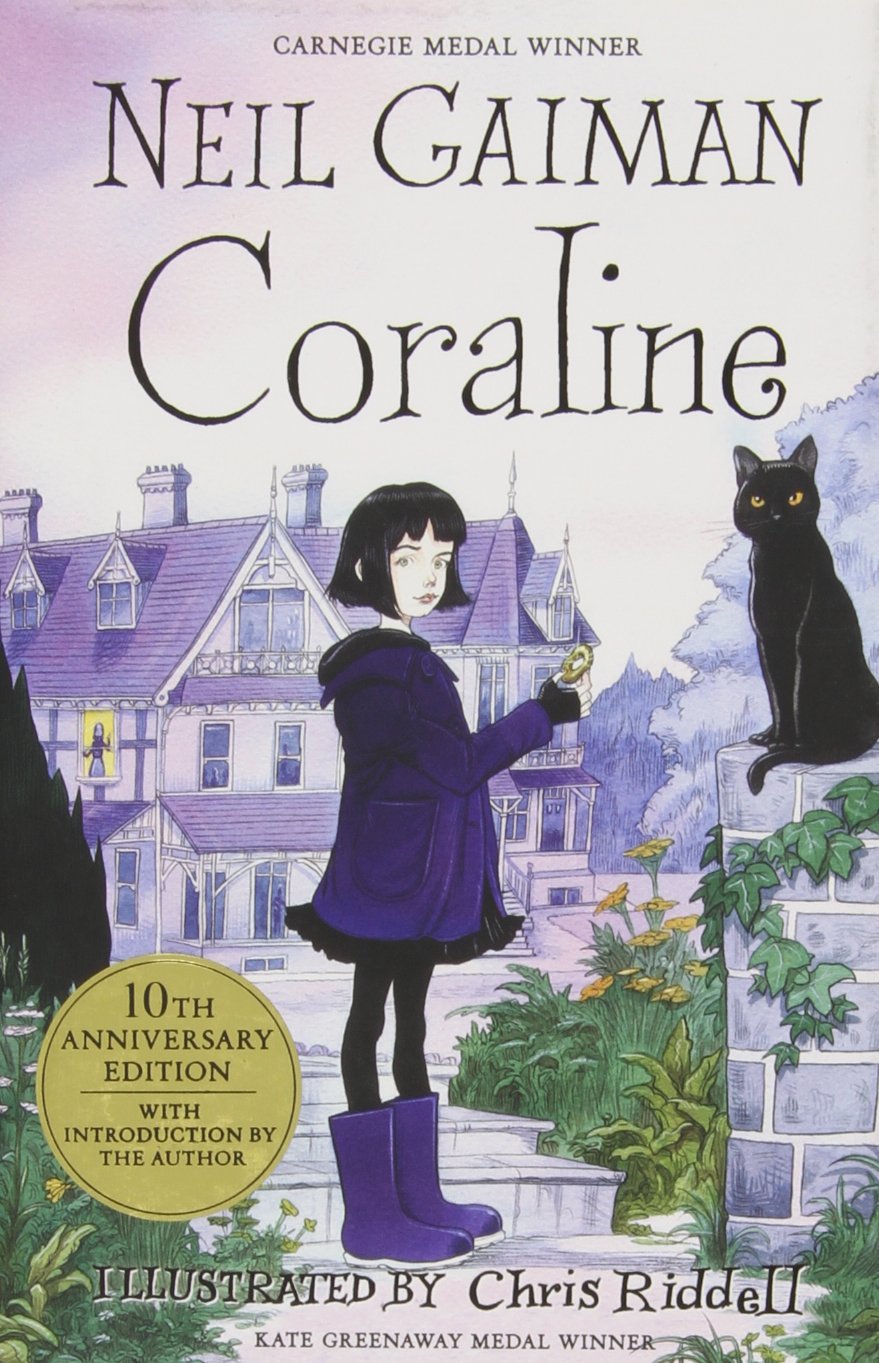
Review - Coraline


Coraline is one of those names I've heard for what feels like ages, but I never knew what the book was about.

I mean, literally no idea.

Ever since I read (and immensely enjoyed) Anansi Boys, I've been on a quest to get my hands on as many Neil Gaiman books as possible. It was about time, too!

Perhaps the best way to describe Coraline is creepy. I wouldn't go so far as to classify it as horror, more like a creepy fantasy. The heroine, Coraline, moves into a new house and she's immensely bored. Her parents don't have much time for her, so she spends the last days of summer vacation investigating the home and getting to know her neighbors--and they're a colorful lot.

But when Coraline discovers a small door into a walled-off apartment in the house, the story takes a dark turn. She crawls through the passageway and discovers another home almost like hers. I say almost, because this home is inhabited by the other mother--a charming woman identical to her mother with the exception of her long-fingered hands and her unsettling eyes. They are two big black buttons.

At first, the other mother (as well as the button-eyed other father) seem perfect. They're cheery and thoughtful and pamper Coraline with all the love and attention she feels she's been missing from her real parents. However, the story takes a sharp turn into creepiness when the other mother tells Coraline that she only has to do one little thing to be happy forever...

"It won't hurt."
When Coraline's real parents go missing, she's forced to confront her fears and embark on a quest to save them before the other mother takes control over her.

I really liked the concept and the creepiness behind the story, especially the part about the button eyes. The overall moral was also a nice, homely one. However, the action felt rushed, like the author wasn't giving us enough time for the plot points to set in. Maybe it's because it's a children's book and sometimes less is more, but I was yearning for just a little bit more.

Even so, being a kid's book, I think it's actually quite scary as is. Maybe a little too scary for some!


After reading the book, I decided to watch the film and was pleasantly surprised by the adaptation. The film incorporates several changes to the plot, the main one being the introduction of a new character, the little boy Wybie.

The reasoning behind including a new character in the film adaptation is so that Coraline doesn't spend the majority of the movie talking to herself. You see, there are many scenes in the book where she is alone with only her thoughts as company (there are also many scenes where she speaks with the cat, who is another important character). Internal dialogue works well on the written page, but on the big screen it could become an issue. An unobtrusive friendly character such as Wybie did the trick, in my opinion--and the appearance of the other Wybie is one of the strongest points for me in the film.

Another great novelty in the film is that we learn a tad more backstory about the other mother. Her motives and techniques are clearer from the beginning of the film. I found the book somewhat lacking on this point.

The ending to the movie was a bit of a letdown, though. To me it felt like it had fallen prey to Hollywoodish clichés and there was really no need to change the witty heroic and original ending which appears in the book. I was highly satisfied with the original ending, as it reminded me of old fairy tales where slyness and trickery save the hero. The film adaptation, on the other hand, ends with a gaudy KA-BOOM along with a dose of deus ex machina.

Overall, I give Coraline three and a half Pirates.


Tuesday, March 22, 2016

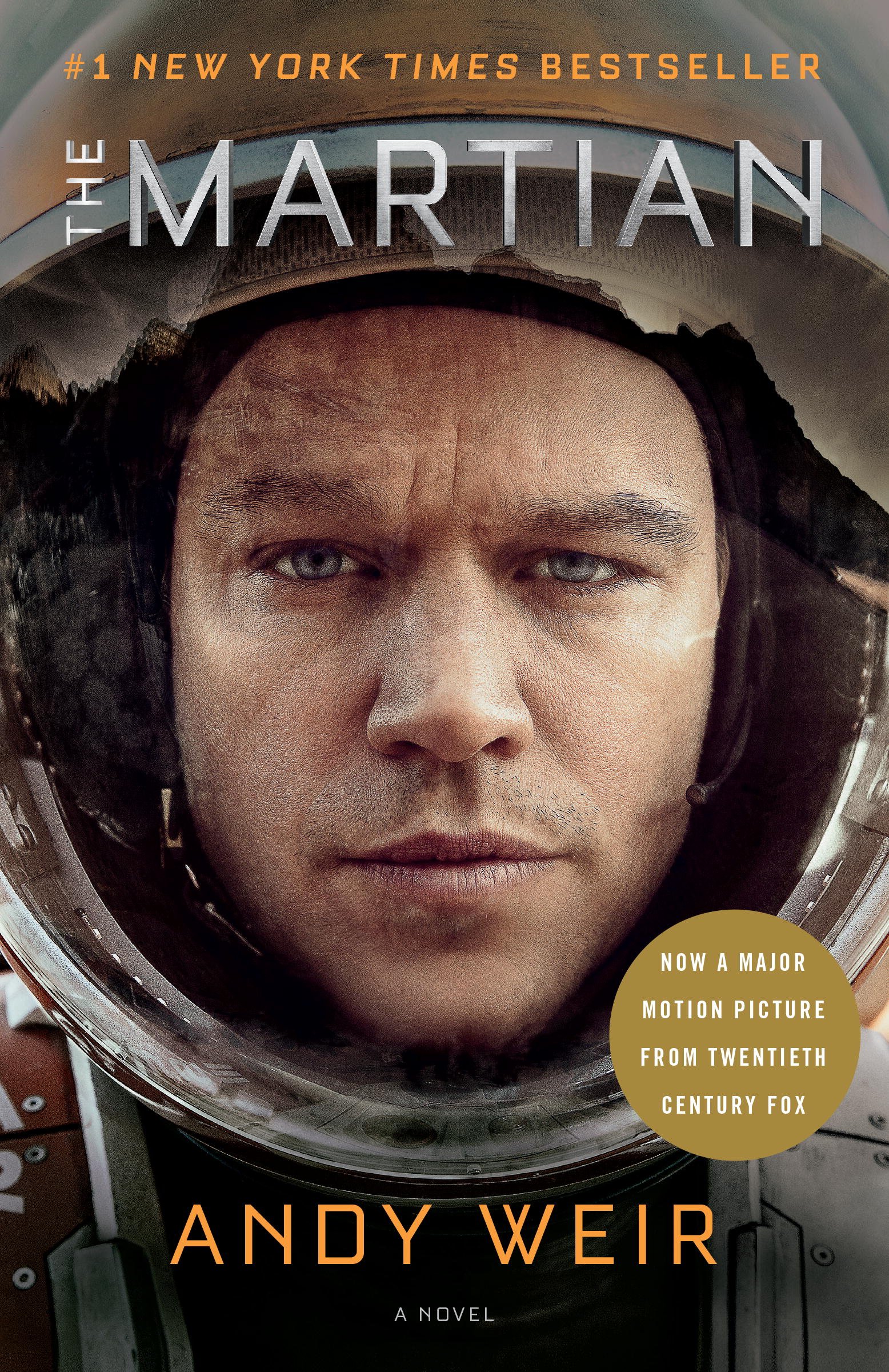
Review - The Martian

This is one of the few times I watched a movie and then read the book. (It's usually the other way around, or I skip the movie version altogether.) I'm sooo happy to say I was pleasantly surprised.

The Martian by Andy Weir kept me entertained throughout, and I kept searching for spare moments to read a bit more. Wanting to return to a book is a great sign. More so in my case because I had already seen the movie and, well, the ending is predictable. There are several events and even lines of Watney's log entries which were mimicked exactly in the film. There are differences, of course, and that's where in my opinion the novel has the upper hand.

Watney is more prevalent in the novel, since most of the chapters are him writing in the system's log, explaining how his day went. Scenes with NASA are his crew mates are short and to the point.

This is excellent if you, like me, feel sympathy for Watney. I mean, sure, he's stranded on Mars, who wouldn't feel sympathy for him, right? Well, Watney can be annoying and immature at times. Other readers on Goodreads have criticized him for his corny jokes and his overall flowery positive attitude. I actually enjoyed his corniness and thought it made him cute.

As for the positive attitude, the way I read the novel, I got the feeling that he wasn't allowing himself to feel despair. He was purposefully shutting off that part of his psyche. There are several moments all the way up to the end where he talks about the possibility of death and he always has a back-up suicide plan in case things go wrong, so I didn't get the impression he was oblivious--just forcing himself to keep a positive mind. That's admirable, in my opinion.

Even though I already knew the details of the ending, there were some scenes that literally gave me goosebumps; scenes involving the solitude of Mars and the possibilities of failure. Those were carried out well, in my opinion.

Nevertheless, not everything was perfect. There were a few things that got on my nerves. The endless mathematical calculations were all right at first, but nearing the end of the novel I just skipped over them. I don't have a mathematical mind, so just skipping all the calculations to reach the outcome was good enough for me. This wasn't really a big problem. It granted the story scientific credibility, even though there were moments when the action was heavily bogged down. I would have preferred more action than calculations, really.

Another problem I had, and this one is more important, is that all the characters in the novel came off as corny and somewhat immature. Their one-liners and little joke wars reminded me of things high schoolers would say--not NASA scientists. I don't think there was a single character who wasn't affected by this novel's overall corniness. This took away some of their credibility and made everyone have the same personality. Watney is a bit more fleshed out, since we see him a lot more, but he's still very similar to everyone else.

Speaking of Watney, we don't know any of his backstory. Nothing. We also don't really get to experience Mars (the sights, etc.). In all the logs we read, he only mentions in passing that he has parents in Chicago. It would have been nice to know a bit more about him than his present predicament. It also would have been nice to visualize the planet more.

Complaints aside, I still enjoyed The Martian immensely and I'm glad I both saw the film and read the novel.

I give The Martian four out of five Pirates!


Tuesday, March 1, 2016

Review - Anansi Boys

If you've read my previous post, you'll know the very first book I finished in 2016 left a sour knot in my gut. Fortunately, I was reading another book at the same time, Anansi Boys by Neil Gaiman, and the adventures within its pages managed to wash away some of the frustration caused by The Boy in the Striped Pajamas.

Anansi Boys is immensely engaging from page one, I deeply enjoyed this story and its characters, from the old trickster Anansi to the victim-turned-hero Fat Charlie and even his suave and egotistical brother Spider. It's full of magic, of gods, and of adventure.

Readers can quickly sympathize with Fat Charlie's plight. He's the mild-mannered son of Anansi, the Spider god. Raised in Florida, Fat Charlie (who isn't really fat, but his father made up that nickname and it stuck) escapes to London the moment he has a chance. But when he receives news of his father's death, he must return to Florida and confront his past.

Fat Charlie's past involves a brother, one he didn't even know he had. When Spider, the long-lost sibling, shows up at Fat Charlie's home, things begin to get out of hand. Spider takes over everything in Fat Charlie's life; he causes complications at his workplace, makes himself his own magical bedroom (hot-tub included) in Charlie's closet, and even shows interest in Charlie's fiancée, Rosie.

Spider screws everything up for poor Fat Charlie, but I still adored him! In my opinion, this is the best aspect of Anansi Boys: no matter how much the brothers try to provoke each other's demise (and believe me, they do!), I still fell fully invested in each one.

As the story progresses, more and more elements of African folklore creep into Fat Charlie's surroundings. He decides he has to get rid of Spider once and for all before his life is officially ruined. I don't want to give anything else away, so you'll just have to read and see where the brothers' antics take you!

The only downside is that the resolution felt rushed and devoid of the magic I'd grown so accustomed to throughout the story. Nevertheless, Anansi Boys is a fun addition to my library, and one I'll surely read again.

Anansi Boys gets four out of five Pirates!


Thursday, January 29, 2015

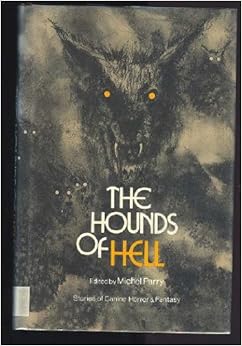
2015 RR - The Hounds of Hell

Oh, happy day! Today I finished the second book from my 2015 Reading Resolution list!

The Hounds of Hell: Stories of Canine Horror and Fantasy, edited by Michel Parry, receives a solid four-star review from me.

Let's begin with the basics. The short stories in this collection all revolve around canines, be they good, evil, spectral, or even real pets. The book I own is the hardcover 1974 edition (I have a soft spot for older books versus newer editions). Most of the stories therein range from the early to mid twentieth century--probably my favorite decades for fantasy and horror.

Some of the stories are entertaining, some pull you right in...and others fall flatter than a pancake. Did I say pancake? No. Something even flatter. A crepe. Stick with me and you'll see.

Let's have a quick roll call, shall we? I'll include the story's title, author, and first sentence, along with my personal verdict.

The Hound, by H.P. Lovecraft
In my tortured ears there sounds unceasingly a nightmare whirring and flapping, and a faint, distant baying as if of some gigantic hound.

KVerdict: Not bad, although Lovecraft 's flowery style does get to me sometimes (I know, the time period...). I have several of his books, but sadly am not a great fan of his work. This story isn't an exception. It's just all right.

Staley Fleming's Hallucination, by Ambrose Bierce
Of two men who were talking one was a physician.

KVerdict: The first of many stories in this collection to have someone stalked by a phantom dog and ultimately get their throat ripped out. *Yawn.*

The Dog, by Ivan Turgenev
"But if you once admit the existence of the supernatural, and that it can enter into the ordinary affairs of everyday life, allow me to ask what scope is left for the exercise of reason?"

JVerdict: An excellent story with a rather slow opening. The Dog has the honor of being the only story to make a chill run through me. Once again, the character is stalked by a dog during the night. This dog, however, is warning him of what's to come...

The Hound of Death, by Agatha Christie
It was from William P. Ryan, American newspaper correspondent, that I first head of the affair.

KVerdict: A nun dreams of things which she believes never existed, but seem more real to her than life. Could she be remembering backwards?--Seeing what's to come? The symbolism, the premonitions, the signs... There is a distinct cult feel around this story, which nonetheless lacks something, as if it weren't completely fleshed out.

Dead Dog, by Manly Wade Wellman
They brought the rebel chief Kaflatala out of the jungle to Father Laboissier's mud-brick house, brought him in a tepoia because he still limped from a Portuguese bullet in his thigh.

JVerdict: Although Dead Dog repeats the premise of a person being stalked at night by a vengeful hound, the African setting, so different from the other stories in the collection, made for an interesting read.

The Dutch Officer's Story, by Catherine Crowe
"Well, I think nothing can be so cowardly as to be afraid to own the truth," said the pretty Madame de B., an Englishwoman, who had married a Dutch officer of distinction.

KVerdict: A ghostly hound wakes up sentries who are asleep on their watch, so of course someone higher up decides to see what happens if he shoots the creature. I don't understand why so many of the characters in these stories feel the need to shoot at dogs.

Vendetta, by Guy de Maupassant
Palo Saverini's widow dwelt alone with her son in a small, mean house on the ramparts of Bonifacio.

KVerdict: This is one of the few stories where the dog is a regular, living breathing pet--trained to kill.

Dog or Demon? by Theo Gift
"The following pages came into my hands shortly after the writer's death."

JJVerdict: Excellent storytelling by Victorian novelist Dora Havers (under a male pen name, of course). Probably what I loved most about this story is the fact that, even though it takes place in 1878 Ireland, the topic of eviction (with all its paperwork and personal drama) is so similar to what could happen nowadays--if you don't include the curses and the phantom killer dog (again).

Louis, by Saki
"It would be jolly to spend Easter in Vienna this year," said Strudwarden, "and look up some of my old friends there."

JVerdict: At first I was a bit disgusted. Murder your wife's beloved pet just to be able to go on vacation? However, once the murder plan is carried out and the truth is discovered, the story deserves a chuckle.

The Howling Tower, by Fritz Leiber
The sound was not loud, yet it seemed to fill the whole vast, darkening plain, and the palely luminous, hollow sky: a wailing and howling, so faint and monotonous that it might have been inaudible save for the pulsing rise and fall; an ancient, ominous sound that was somehow in harmony with the wild, sparsely vegetated landscape and the barbaric garb of the three men who sheltered in a little dip in the ground, lying close to a dying fire.

JJVerdict: The protagonists of this story, Grey Mouser and Fafhrd, are the protagonists of a series of short stories. The Howling Tower starts off a bit slow, and the point of view is so distant it's at times difficult to grasp, but once the action begins it's a tale full of imagination that I won't mind reading again.

The White Dog, by Feodor Sologub
Everything grew irksome for Alexandra Ivanova in the workshop of this out-of-way town--the pattens, the clatter of machines, the complaints of the managers; it was the shop in which she had served as an apprentice and now for several years as seamstress.

LVerdict: This is probably the flattest story in the entire collection. The beginning is all right and promises something like revenge or at least a good fight between Alexandra and a Tanechka, the youngest seamstress. What follows, however, is just awful. I'll just explain it, so if you don't want any spoilers please stop reading here. After being called a dog by Tanechka, Alexandra goes into a rage and returns home, where she ponders her existence and the round, full moon. There is ambiguity about whether or not she is a shape shifter. Driven by a force stronger than her will, Alexandra tears off her clothes and runs outside, where she lies on the ground and howls at the moon. Two neighbors see what they believe is a massive white dog, so logically (¿?) they run out and shoot it...

"The discharge of a rifle sounded in the night air. The dog gave a groan, jumped on its hind legs, became a naked woman who, her body covered with blood, started to run, all the while groaning, weeping and raising cries of distress. The black-bearded one and the curly-headed one threw themselves in the grass and began to moan in wild terror." THE END

Seriously? Put some Nutella on that crepe and serve it to me hot.

The Hound, by William Faulkner
To Cotton the shot was the loudest thing he had ever heard in his life.

KVerdict: I could have enjoyed this American South story more if the writing weren't so disjointed. There are several passages--especially descriptions of places and series of actions--where it seems the author just skipped over entire sentences. I don't know if this style is intentional to fit the protagonist, but it made for a confusing read.

The Emissary, by Ray Bradbury
Martin knew it was autumn again, for Dog ran into the house bringing wind and frost and a smell of apples turned to cider under trees.

JJVerdict: An excellent story told in an excellent voice--probably, my favorite from the collection, in fact. Little boy Martin is perpetually sick and bed-ridden, but his faithful Dog tells him everything of the outside world through the smells and brambles (and other stuff...) he brings back in his fur. The ending had a very strong Pet Sematary feel to it, which was juuuuust fine.

The Hound of Pedro, by Robert Bloch
They said he was a wizard, that he could never die.

JVerdict: Another excellent story revolving around wizardry and black magic, this time in 1717 Mexico. The depictions of violence and cruelty are exceptionally vivid in this one, so it's not for the faint of heart.

The Whining, by Ramsey Campbell
When Bentinck first saw the dog he thought it was a patch of mud.

LLVerdict: Horrible! Awful! I never want to read this again! When I began reading this collection, I had some reservations as I was worried that some of the stories might depict cruelty to a "real" (not phantom, not satanic) dog. This story fed my fears. And of course, the protagonist loses his marbles in the last line or two. How convenient. Nope.

The Death Hound, by Dion Fortune
"Well?" said my patient when I had finished stethoscoping him, "have I got to go softly all the days of my life?"

JJVerdict: Once again, an excellent story told by an excellent storyteller, Violet Wirth, "the most influential female occultist since Madame Blavatsky." The Death Hound features occult detective Doctor Taverner, who uses his wit and a dose of white magic to thwart an attempt at mental assassination. How come I never heard about this author or this character before? *Runs off to find more Taverner stories!*


And that concludes my analysis of The Hounds of Hell. Overall, it was an enjoyable read, though the topic of killer dogs did become a bit repetitive (I can't blame anyone--it's a collection of stories about killer dogs!). The best result of reading this collection is that now I know more authors and more characters I can look up. Doctor Taverner, here I come!

Would you like to read The Hounds of Hell?

What book should I strike off my list next? I was thinking about reading The Vision by Dean Koontz, merely because it's completely different to what I just read. However... I remember the first pages being so sappy... I guess I'll have to soldier on through it, right?
Thursday, January 22, 2015

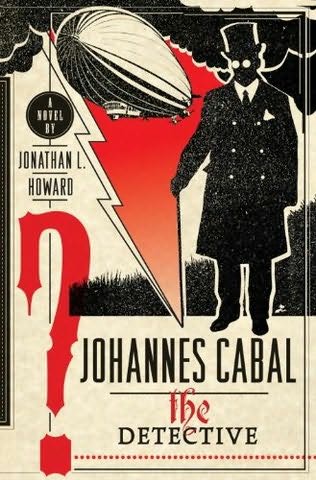
2015 RR - Johannes Cabal the Detective

Driven by guilt and a little bit of shame, I recently resolved to finish reading all the unfinished books in my home library.

The first book I can happily and with a great sense of completion strike off the list is Johannes Cabal the Detective by Jonathan L. Howard.

Back in the day, I happened across the prequel, Johannes Cabal the Necromancer, in my local bookstore (which is great since I live in Spain and the English novel section of my nearest bookstore is usually packed with gaudy best-sellers I'm not inclined to read). I thoroughly enjoyed the read and fell in love with the antihero protagonist, his vampiric brother, and the magic involved in their adventures. There was a slight hiccup nearing the end of the novel, though: the author suddenly shifted full point of view to the so-called antagonist (a police officer), and my God was it dull!

Nevertheless, I finished the novel and was thrilled to hear a second part would soon come out. Johannes Cabal the Detective is the first and only novel I've ever--EVAAARRR!--pre-ordered on Amazon.

When the lucky book finally arrived, I jumped right into it, but unfortunately I abandoned all hope at around chapter eight. Well, it's 2015 now and it's time to give the novel a decent ending.

I finished reading Johannes Cabal the Detective last night. Final verdict: all right, but lacking much of the charm from the first novel (probably because the antihero's brother doesn't appear). What's more, as the title blatantly points out, this novel is a whodunit crime investigation--and that just ain't my cuppa tea.

Let me go through some highlights, and some hurdles. Hurdles first!

In my opinion, the entire novel suffers from a lack of focus. The author is just so utterly long-winded! The point of view jumps all over the place at all times, which doesn't help, either. I've had to reread several sentences more than once because I continually got lost in circuitous sentence structures. I believe a one-paragraph example is sufficient to give you a sense of the prose:

  "Well, Herr Harlman," said Cabal as he fitfully considered escape plans without any general enthusiasm. The whole concourse was surely dense with assorted secret policemen just itching for an excuse to kick his spleen into sausage meat. The fact that he was being treated to coffee rather than being bundled into the back of an unmarked van by several burly servants of the state armed with overactive thyroids and lengths of rubber hose implied that the covert machinations of Senza were handled with rather more civility than those of its neighbours, as well as subtlety. He could barely believe that he had so utterly failed to spot the trap. Therefore, he decided, he would wait for the scale of the operation he had wandered into to become apparent before giving and bright ideas for escape serious consideration. "What happens now?"

[Pages 292-293 of my 2011 paperback edition]

Yes, that is all presented as one giant paragraph, with a tiny bit of dialogue tacked onto either end.

See what I have to deal with here? Extreme cases of wordiness such as this, plus a whodunit theme which has never really interested me, are the two main reasons why I abandoned Johannes Cabal the Detective. Am I glad I reprised my read? Sure! The author and the protagonist deserve that much. To be honest, now that I've completed this novel I'm actually toying with the idea of tackling the third book, Johannes Cabal: The Fear Institute. At least the title sounds more up my alley.

Now for the novel's highlights!

Johannes Cabal continues to be a fascinating sick bastard of a man. He's the typical antisocial supercilious antihero, and that's what I simply adore about him. His eccentric and generally chill-inducing personality aside, he's fighting for a very personal cause--an excellent cause which I won't reveal here, but which just goes to show that even cold-hearted bastards can have a shred of humble humanity in them.

Jonathan L. Howard might be long-winded and at times frustrating (at least to me), but he is also an excellent author with a delicious range of vocabulary. Howard has a spellbinding way of explaining the inexplicable. Here's an excerpt that had me completely hooked:

  The room stank like a laboratory fire, and the thick chemical fug made Miss Barrow's eyes sting. Cabal ignored it all, his own eyes screwed shut as he chanted and chanted a seemingly endless litany of inhuman words from an inhuman religion. They were awful words, incomprehensible to her, but jagged, ugly things that he spat out like stones and razors. That he knew them by heart did not escape her, and she feared him for that, for it showed depths in him that opened into the abyss. Nor did he hesitate when Cacon's heels began to rattle on the floor, his legs spasming like the galvanised corpse of a frog on a school science bench. It was death, but it was in reverse, and the most obscene abrogation of the laws of nature she could ever imagine. Life did not return easily to the carcass, but was bullied and coerced, and what little dignity there is in death was torn and tattered by this sordid reversal. Cacon seemed to swell with something that was just close enough to life to serve, but equally, she sensed in her every fibre that it was a poor sort of stopgap and that it would leak away again soon enough. When Cacon started to shake and suck in ragged, dry breaths, she shuddered with revulsion, but she could not stop watching.

[Pages 250-251]

Yes, I'm aware this excerpt is another massive single paragraph, but this one held my attention through and through and wowwie, Batman! *Round of applause.*

Overall, I would give Johannes Cabal the Detective a 3.5. Not bad, but it could have been better if many things had been more to-the-point.


HarpyMax has some excellent Cabal fan art.
First book off my list! Yay! I think I'll go for something completely different next. How about... The Hounds of Hell, Stories of Canine Horror and Fantasy?

Monday, February 25, 2013

Books for Writers # 5: Starve Better, review by Steven Young

Today's post is a book recommendation for all us writers, by fellow CCer Steven Young. He grew up in a village you've never heard of, but currently calls South London home. A marine biologist of sorts, he works at sea out of exotic locations like Singapore, Antarctica and North Yorkshire. With a single fluke short story sale, he is not yet a writer (or that's what he'd want us to believe...), but day by day, he learns.

You can find Steven on Critique Circle, along with the rest of us. Take it away, Steven!

When I discovered Starve Better: Surviving the Endless Horror of the Writing Life by Nick Mamatas, my head was spinning. I’d devoured all the how-to books and blogs I could find. And suddenly- oh my!- there were all these rules I had to follow! “Never use adverbs,” I was confidently informed. “Said-bookisms are a bad idea,” another source snarled. “Your writing will be ruined by passive voice,” said yet another. I felt paralysed, as though my mind was being poisoned by advice-overload. When I saw the opening chapter, “All Advice is Terrible Advice, Plus Other Useful Advice,” I knew I’d found my antidote.

After listing a bunch of, often contradictory, rules (“don’t be a pretentious Little Miss Fancy Britches. Make your prose purple and poetic,”) the author proceeds to debunk the very notion; pointing out that there “are no rules. Only the results matter.” The Harry Potter books, for example, are infamously littered with adverbs, and at least a few people seem to like them.

Before going further into his critique of traditional writing wisdom, the author detours briefly to highlight one recurring focus of the book worth emphasising here. He is primarily a short fiction writer, and much of what is said stems from that. This section is interesting in itself, going into the reasons why someone would write short fiction; for all that it is so uncommercial. And the reasons why someone should not write short fiction made me reassess some of my own assumptions. Turns out, it is neither easier than writing a novel, nor good practice for doing so.

The author goes on to discuss various structural elements of storytelling. One chapter discusses the importance of choosing a focus for the story, for a writer to capitalise on their strengths and downplay their weaknesses. Not every author can be a master of the intricate plot. Not every writer can break the reader’s heart with their characters’ plight. Work out what you are good at. Do it.

Something currently close to my heart is that dread beast- The Hook (Quick! Read the first sentence of this post again. Did it draw you in? If you’ve gotten this far, hopefully so. But believe me, I fretted about it.) The author has issues with the phrase ‘start with a hook.’ He considers the hook the “motor of the story.” It can be many things, from an unexpected plot twist to the quality of the writing itself, and can be found at any point in the story. Too often, ‘start with a hook’ leads a writer to include whizz-bang excitement in the first paragraph, followed by pages of irrelevance. No. The important thing is to begin the story at the place when the story actually starts. The purpose of the beginning is to show the reader that the writer knows what they are doing.


Via analysis of the role of the sentence in writing (including several pages rhapsodising about two sentences from a story by Raymond Chandler) and advice on writing dialogue (listen) he gets to an interesting discussion about how to end stories. Specifically, he suggests writers avoid neat, everything-is-resolved endings, to “leave room for that post-reading daydream”.

The part of the book dealing with the writing process itself ends with perhaps the most important question. “Why Bother?” Why deal with rejection after rejection, instead of self-publishing immediately. Reputation, essentially. Whilst I’m not sure I agree with his claim that being “not terrible” is sufficient for publication (as I think back to my own rejections, I certainly don’t want to agree), I can’t help but see publication as a kind of ‘proving ground’ for new authors.

The second half of the book shifts emphasis towards the nitty-gritty of getting cash for words. The focus is very much on non-fiction. The chapter on publishing non-fiction includes some eye-openers. I had no idea how much better paid non-fiction can be compared to fiction! He takes the reader through the process of finding and soliciting markets, and highlights the differences from fiction- work your way up, not down, and don’t bother trying to find market listings and submission guidelines.

The author also mentions writing for non-publication. Remember, this is all about fast money, not getting a six-figure advance and the Pushcart Prize. As he describes gigs from writing business letters to church newsletters, he gives the impression of being bloodhound of writing, forever sniffing around for the next easy dollar.

Considerable space is devoted to content mills and his time ghost writing term papers for students. Content mills seem to be the sweatshops of the writing world, with writers churning out online fluff for a pittance. There are perhaps ethical concerns regarding the ghost writing but I’m reviewing the author’s book, not his moral code, so whatever your stance, he highlights yet another way of getting paid to write.

This book may not be for everyone. It looks at the world of professional writing with a cynical eye. It may poke holes in fondly held preconceptions about writing, but does so with a distinctive acerbic wit. Despite being the very definition of the “barely published neophyte writer” whom the author disparages, and despite all advice being terrible, here’s some advice. If you are open to a perspective that differs from the norm, if you want to know more about life in the writing trenches, if you want to be entertained, read this book.


Thank you for your review, Steven. It's been great having you here!

Sunday, February 10, 2013

Books for Writers #4 - Characters, Emotion and Viewpoint


(Sorry for the delay posting this, but I somehow managed to superglue the pages of the book together...)

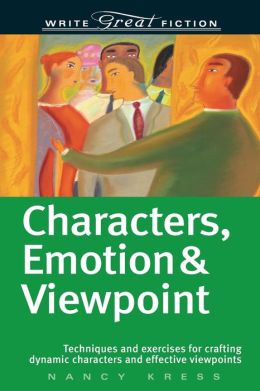
This week’s recommendation is Characters, Emotion and Viewpoint by Nancy Kress. It's part of the Write Great Fiction series, and a great read for anyone wishing to add more depth to their stories.

Characters, Emotion and Viewpoint is loaded with useful advice, information and exercises that you can apply from the very beginning--no matter the writing stage you're in.

Chapters one to seven focus on creating deep and believable characters, chapters eight to eleven discuss emotion, and chapters twelve to sixteen manage point of view. The transition from one topic to another is very well done and easy to follow, as each chapter builds on the previous ones.

Kress delves into so much detail—and offers so much advice—that it's difficult to choose just a couple points to comment on in this review. There's just so much going on in this book and it's all so great!

For example, in the chapters on how to create characters, the author defines each type of character, gives advice on making (good or bad) first impressions, tackling a character's social masks and true motivations, offering interesting backstory, giving your characters inner turmoil and conflicting desires… She even gives specific character portraits for genre fiction (characterization in romance, in westerns, in sci-fi...). 

A great chapter on characterization is Chapter 5: Showing change in your characters—If I knew then what I know now. Showing character change and development can be, as Kress says, overwhelming. Her main advice is to break down the task and write in scenes—and specify exactly what each scene "is supposed to accomplish". I have to admit I learned a lot from this section, and have been trying my best to apply it to my own work.

After the section on characterization, the author goes on to comment emotion. Kress offers us this great example:

All the following statements […] are made spontaneously by characters who have just learned that their dogs have been run over by a speeding truck:

- "Oh my God, no! No! Oh, not Cinnamon—no!"
- "Goddam $#%@*& driver! I'll kill him!"
- "Where is she? Can I see her? Who picked up the body?"
- "Did she suffer? Oh, please say death was instantaneous!"
- "I just let her out a minute… oh, God, I should have put her on the leash… oh, it's my fault… poor Cinnamon…"

- Silence.

All these examples are very short, yet they already show us character emotions—and character traits, thus reminding readers of everything we learned in previous chapters. See how it's all linked together?

Other techniques Kress comments on while discussing emotion are clichéd techniques, showing emotion through metaphor and sensory detail, special cases of emotion (loving, fighting and dying) and frustration. Yes, the author dedicates an entire chapter to introduce frustration as a valuable tool to nudge characters along and keep readers interested. Very interesting indeed!

As for point of view, Kress starts out by defining protagonist and point of view character, and then gives advice on how to choose the point of view character, as well as how many there should be (hint: as few as possible to still tell your story).

After giving a quick description of each type of point of view (first, third, and omniscient—as well as experimental and combinations of first and third), the author gives us in-depth information and guidance on the three main types of point of view. This is great help for anyone who struggles with defining clear points of view.

All in all, Characters, Emotion and Viewpoint is yet another great reference book for creative writers. If you’re having trouble showing emotion, if your characters act more like paper dolls than real people, or if you need some guidance on choosing the right point of view, this is a must-read! Along with The Emotion Thesaurus, it can give you all the tools you need to breathe life into your story.


Apart from the wealth of exercises at the end of each chapter, another added perk to this book is that each chapter contains special question boxes with writing-related topics, for example:


Question: Is a thesaurus useful in writing descriptions of people and places?
Answer: A thesaurus is either a great aid or a disastrous deceiver, depending on how you use it. [The author then goes on to give an explanation.]

I don’t know what I would have done without it! (And yes, I managed to salvage the pages I had glued together...)

Sunday, January 27, 2013

Books for Writers #3 - The Emotion Thesaurus

For the past couple of weeks, I've been recommending helpful books for writers. The first one was Self-Editing for Fiction Writers. The second one was Beginnings, Middles and Ends. This week, I'd like to talk about an excellent resource to help you add variety to your characters' emotions: The Emotion Thesaurus by Angela Ackerman and Becca Puglisi.

What word can I use to describe Ackerman and Puglisi other than AWESOME? These two ladies are in charge of The Bookshelf Muse, an award-winning blog by writers, for writers. If you haven't checked out their site yet, give it a click. I'll take a seat.


Ackerman and Puglisi certainly know what they're talking about--and they love to share, which is great for all of us! On The Bookshelf Muse, you'll find tons of helpful (and free!) information organized in sections:

- Character traits thesaurus
- Weather and earthly phenomena thesaurus
- Colors, textures and shapes thesaurus
- Setting thesaurus
- Symbolism thesaurus

and their current project: Physical attribute thesaurus.

Without a doubt, Ackerman and Puglisi are thesauri experts!

Oh, and did I mention all these thesauri are absolutely free?

There is an exception to all these freebies, though, and it's the book I'd like to recommend this week: The Emotion Thesaurus. On sale in digital and print format, it is yet another wonderful addition to every writer's library. But beware! This is not a how-to guide to writing and describing emotions, as some one- and two-star reviewers on Amazon believed, it is--as its title clearly announces--a thesaurus.

The Emotion Thesaurus offers information on 75 different emotions, arranged alphabetically, ranging from adoration to denial, embarrassment, guilt, relief, suspicion and worry. The authors dedicate two pages to each emotion, and offer the following information:

- Definition
- Physical signals - these are external signs perfect for when your point of view character is observing someone else experiencing this emotion.
- Internal sensations - perfect for describing the point of view character's emotion from the inside.
- Mental responses - again, perfect for the point of view character.
- Cues of acute or long-term [emotion]
- May escalate to [other emotions]
- Cues of suppressed [emotion]

Let's see this through an example. I'll open to any random page:

Envy

Definition: resentful awareness of an advantage enjoyed by another, paired with a longing to acquire that advantage.

Physical signals:
staring
glowering
the mouth turning down
flaring nostrils
muscles bunching
[...] [There are many, many more elements in this list.]

Internal sensations:
quick heartbeat
rising body temperature
dry throat
[...]

Mental responses:
a strong desire to touch, hold, and own
anger at the unfairness or injustice
[...]

Cues of acute or long-term envy:
feeling that life isn't worth living without the advantage
grabbing or stealing the coveted object
[...]

May escalate to:
determination (54), resentment (130) [...] [The numbers refer to the page where you can find the entry for the emotion.]

Cues of suppressed envy:
congratulating or offering praise
forcing a smile
[...]

This is just a sample of what you might find in any given entry. I purchased this book when I had already finished the second draft of my novel, and was struggling with edits. I had a whole lot of jaw clenching and teeth gritting going on! One critiquer on Critique Circle actually mentioned that I have some sort of fascination with human jaws... It was a little embarrassing, but funny.

So how did The Emotion Thesaurus help me? It gave me ideas to add more variety to my character's expressions. It helped me think outside the box I had built around myself, and offered me hundreds and hundreds of new possibilities. Now I have it by my side whenever I go through my work, and I check it constantly to see if I can use a different expression to show what my characters are feeling.

Apart from the thesaurus itself, which is already a great buy, The Emotion Thesaurus contains a short explanation at the beginning with information on the power of emotion, balancing it all out, telling instead of showing, using clichéd emotions, melodrama, etc. This is just another added bonus. You can get a taste of these opening explanations by clicking the look inside option on Amazon.

In conclusion, The Emotion Thesaurus is yet another great resource for writers! I'm glad to add it to my bookshelf.

Happy writing!

Sunday, January 20, 2013

Books for Writers #2 - Beginnings, Middles and Ends

Last week, I posted an article with several tips for beginning writers. I recommended observing how established writers crafted their prose, joining a critique group, and studying writing how-to books. In the post, which you can see here, I reviewed--and recommended--Self-Editing for Fiction Writers by Renni Browne and Dave King.


This week, my book recommendation is Beginnings, Middles and Ends by Nancy Kress. It is part of the series Elements of Fiction Writing.

As might be expected, the book is divided into three clear parts:

Part I: Beginnings
Part II: Middles
Part III: Endings (Note the title says "ends" but the book mentions "endings"--just a small detail I wanted to share.)

Each part is comprised of three chapters brimming with explanations, advice, examples and exercises. I must admit there is so much information in each chapter that it might seem overwhelming at first. For example, in Chapter 1, called The Very Beginning: Your Opening Scene, Kress highlights the importance of knowing your story's implicit promise to readers. She then goes on to describe characterization, conflict, specificity and credibility. Once she has described the elements of a successful beginning, she comments on how to put them all together to create an opening that works.

Because there is so much valuable information, Kress has added a summary and several exercises to the end of each chapter. The exercises are designed to make you reflect on various aspects of story building so, unlike last week's book, Beginning, Middles and Ends doesn't contain a suggested answer key.

I personally recommend reading each chapter through from start to finish, and then going back for a slower read with a highlighter and a pencil to jot down notes.

When describing techniques to build successful middles, Kress delves into how to develop the promise established in the beginning, choosing the direction of your story, planning the climax, tackling character development, and overcoming writer's block. All great information to get you through to the end!

As for endings, the author sums up their importance beautifully:

"At its beginning, a story makes the kind of implicit promise we've discussed throughout the book. In the middle, the development of both characters and conflict extends that promise by arranging forces in opposition to each other. We see, through skillfully chosen patterns of events, various problems and tensions come closer and closer to collision. Then comes the ending. It must use those same characters, conflicts, problems and tensions to show us the collision (the climax)."

From here on, Kress offers advice on how to deliver the story's promise, how to portray the climax and denouement, and how to reach the very end: the last paragraph, the last line. This is particularly great, since sometimes we need a helping hand up to the last period.

Apart from offering writing techniques, Beginnings, Middles and Ends is a great addition to any writer's collection because it also offers moral support. Yep. Kress is aware of the turmoil we authors constantly live in. She knows, ooohhh how she knows! She even includes sections in her book dedicated exclusively to getting writers out of a rut:

"Common reasons for getting stuck on either a short story or a novel are fear of failure, fear of success, literary fogginess, and wrong direction. In addition, novelists may get stuck if they become overwhelmed by the sheer magnitude of writing a novel: in the page count, the time investment, and the stamina required."

Kress then goes on to explain each of the reasons for getting stuck, and she mentions techniques to help get unstuck. In addition, she adds in a short section about techniques that won't get you unstuck.

To sum up Beginnings, Middles and Ends--and what a great addition it makes to every writer's bookshelf--, I would like to share a review written by A. Wolverton on Amazon.com:

"After reading 'Beginnings, Middles and Ends,' any beginning writer will have many of the tools needed to put together a good story or novel. Kress takes the reader through a step-by-step process that makes you think, 'It's so simple. Why didn't I think of that?' It's so simple because Kress has expertly targeted the areas that most writers have trouble with and has offered workable solutions. Her writing is very clear and readable. The examples and exercises alone are worth the price of the book. If you are interested in writing fiction and can only buy one book, this is the one."

Sunday, January 13, 2013

Books for Writers #1 - Self-Editing for Fiction Writers

Back when I was a reckless teen and computers trembled in my presence, I thought that my writing would get better just through practice. The word just is important here. I used to think that if I wrote a lot, about whatever I wanted, my writing would improve.

I was on the right track, I guess, but there were some major flaws in my logic.

While constant practice is an important factor, it's not the only thing you should rely on to get your writing in shape. You need to use different tools to mold the craft, because it ain't gonna fix itself!

My main advice to improve your writing is:


1) Read everything: good books, bad books. If you can discern between good and bad writing, great! Don't plagiarize other authors, but pay attention to how they show a scene, how they express the story on the page. See where and how they end their chapters. What moves you? Why? Go back and revise the scene and find the parts that especially caught your attention. The dialogue? The nuances hidden in the action?


2) Share: shed your fears and shyness and join a writing group. Critique Circle is a fabulous one. Put on your thick skin cloak and have other people critique your work--but also be ready to give critiques. I've learned as much giving critiques as receiving  them. The people on Critique Circle have taught me so much, any form of "thank you" wouldn't be enough!


3) Study writing help books: This is the point I'd like to expand in the next few weeks. We use textbooks when studying languages, chemistry and mathematics, so why not use textbooks to study how to write? In the next few weeks, I'm going to comment on several books that will certainly help you hone your craft.


This week's selection might come as a surprise. An editing book? Shouldn't it come last--after the writing is done? Maybe. Maybe not. This week's book is so great it can help you even if you haven't started typing up your story!


Self-Editing for Fiction Writers is an excellent reference book with reasonable and well thought out suggestions. That's what I like most about it: the authors don't lay down the law. Instead, they gently guide the reader toward the stylistic conventions that work best.

I read this book when I was about halfway through the second draft of my debut novel Serving Time. The second draft could actually be better defined as a complete rewrite, so most of the material was new. After studying the tips and examples in this book, I applied all the new knowledge to everything I wrote--and improved the quality of my work. This is the reason why Self-Editing for Fiction Writers is the first book I'd like to share. If you skim through it before you've completed your manuscript, you'll immediately be able to apply the advice from then on.

In the twelve chapters that comprise Self-Editing for Fiction Writers, Browne and King give advice on showing versus telling, characterization and exposition, point of view, dialogue mechanics, interior monologue, voice, and much more.

Each chapter contains example passages to highlight the main topic. Many times, the examples are taken from well-known works such as The Great Gatsby and Gone with the Wind, combined with edgier works such as Stephen King's Dreamcatcher. Sometimes the authors switch around elements in the examples to show different narrative possibilities. It's an interesting and enlightening approach.

At the end of each chapter, you'll find a checklist with the main points so you can make sure you're applying all the tips in your own work. For example, here's just one item from the checklist you'll find in Chapter 1: Show and Tell.


  • Are you describing your characters' feelings? Have you told us they're angry? irritated? morose? discouraged? puzzled? excited? happy? elated? suicidal? Keep an eye out for any places where you mention an emotion outside of dialogue. Chances are you're telling what you should show. Remember to R.U.E. [Resist the Urge to Explain]


What's more, at the end of each chapter you'll also find several exercises to practice what you just learned. An added perk is that the book actually contains answers at the back, so you can compare your answers to the solutions the authors suggest. Here's an example exercise, found at the end of Chapter 8: Easy Beats:

A) First, try editing out beats that don't work.

  "You're sure it runs?" Mr. Dietz said.
  I leaned against the fender. "It did last time I tried it."
  "Yeah, well, when was that?" He peered through the back window.
  I picked at some dirt under my fingernails. "Just last week. Here, listen." I pulled out the key, hopped in the front seat, inserted the key, drew the choke, popped it into neutral, and hit the starter. The engine sounded a few times, caught, and the sputtered and died. I pumped the gas once or twice and tried again. This time it caught and began to purr.
  "Well, I don't know. It sounds all right, but I don't like the looks of the body." He kicked the tire.
[...]

Overall, Self-Editing for Fiction Writers is a pleasant and informative read. I highly recommend it to all writers, whether seasoned or novice. Everyone can benefit from the advice, examples and exercises. For more information, check the link in the book title above, or go to Renni Browne's website.

Happy writing!
Related Posts Plugin for WordPress, Blogger...