Showing posts with label 2016 Reading Resolution. Show all posts

Monday, June 13, 2016

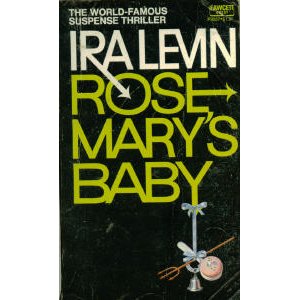
Review - Rosemary's Baby

You've probably heard of Rosemary's Baby before. The classic 1967 novel by Ira Levin was transformed into the 1968 film by director (let's keep our personal opinions aside for now) Roman Polanski. The movie has 99% on Rotten Tomatoes! The story was also made into a TV miniseries in 2014 with questionable appeal...

I personally haven't seen the movie but I've heard about it and already had a general sense of what the book would be about when a coworker offered to lend me his copy. Personally, I'm glad I didn't know too much beforehand because Rosemary's Baby was a delightfully dark read.

The story begins vanilla enough: Rosemary and Guy Woodhouse, recently married, get into the New York City apartment building they've (she's) been longing for: the Bramford. But the Bramford has a dark history of Satanists and cannibals, tee-hee! Even though Hutch, Rosemary's close friend, tries to put her off the building, Rosemary and her husband move in and begin a new life together.


Although not much happens in the first part of the novel, aside from moving in and decorating, meeting the neighbors and encountering a suicide, the matter-of-fact way Levin has of explaining Rosemary and her husband Guy's day-to-day kept me turning page after page. Of course, the action centers around Rosemary, only twenty-four years old and married to up-and-coming actor Guy Woodhouse, who is nine years her senior.

Rosemary initially came off as a naive housewife suffering from too much dependency on her husband. She parted with her religious beliefs and her family ties when she decided to marry Guy. However, as the couple meets their sketchy (and nosy!) neighbors Roman and Minnie Castevet, Rosemary's personality becomes clearer. She's not so much naive as gentle-spirited and uprooted from her natural habitat. This made for an endearing main character, who I could sympathize with up to the final page.


When Rosemary finds out she's pregnant, something she had been yearning for, her surroundings turn a shade darker and now people who seemed to be her trusted neighbors and friends look more like enemies.

In the final third of the novel, Rosemary puts all the pieces of the puzzle together and realizes exactly what is going on around her. She becomes a take-charge type of character, who is still limited by her duty to her husband and her obstetrician (who happens to be in on the entire scheme surrounding her baby).

I don't want to reveal any of the action in this review because the both the novel and the classic film have been talked about to death already, but let me just say that Rosemary's Baby was an excellent thriller--not a horror story. The ending, however, left me wanting more because the story takes a sudden sharp turn into the paranormal and opens up so many fantastic doors which we never get to cross because the novel simply ends. The last scene in the novel made my heart go out to Rosemary and truly demonstrated what a gentle soul she is.

Rosemary's Baby receives five Pirates!


Monday, May 30, 2016

Review - Resolution by Robert B. Parker

Resolution is a story about rugged, dusty, sharpshooting, whiskey-loving manly men doing manly-men things such as shootin' and talking 'bout shootin', and then shootin' som'more. These men are too busy managing their testosterone to have emotions, too deep in the heart of Marlboro Country to make full sentences. They are macho.


Okay, now on with the real review.

Resolution is a western, not a genre I typically read (unless we go back to when I was around 9 and in love with The Oregon Trail and everything western). I bought this book on a whim in a used book store. It turns out it's the second novel starring the characters Everett Hitch and Virgil Cole, the first one being Appaloosa. I haven't read Appaloosa but that wasn't a problem.


The very first page of the novel made me think of the wonderful online group Critique Circle and its infamous Hook Queue, where, only once a month, members have the chance to anonymously critique (savagely tear apart) the opening hook to the pieces submitted.

Just have a look at the entire first page from the novel and, if you're acquainted with the Hook Queue, tell me if it would survive.

  I was in the Blackfoot Saloon in a town called Resolution, talking with the man who owned the saloon about a job. The owner was wearing a brocade vest. His name was Wolfson. He was tall and thin and sort of spooky-looking, with a wall-eye.
  "What's your name?" Wolfson said.
  "Hitch," I said. "Everett Hitch."
  "How long you been in Resolution?" Wolfson said.
  We were at the far end of the big mahogany bar, sipping whiskey that I had bought us.
  "'Bout two hours," I said.
  "And you come straight here?" Wolfson said.

I have to admit I said "Oh, crap" when I read that opening scene. Fortunately, the story picks up immediately and we are whisked away to the brand new town of Resolution, where our main character is hired as a gunman for the town saloon.

Despite the choppy and curt style (it's Hitch's point of view, after all), and the ubiquitous "said," the unceasing action--however small--in each short chapter was enough to keep my attention and make me read just a little bit more. By the time I decided to stop I had already reached page 100.

That's probably the best thing about this novel: the chapters are short and focused on one scene.

More characters are introduced as the story progresses, and a main conflict also rears its ugly head: Wolfson wants to claim ownership of everything: the town, the surrounding land, the mine--and all at the expense of the current homesteaders.

Hitch is soon joined by his comrade Virgil Cole, and both end up doing Wolfson's dirty work, even though it goes against their ideals. It was interesting to see two tough western men doing things they didn't agree with, and all for a paycheck. I spent many chapters wondering when their patience would run out and they would turn on Wolfson.

But then the ending came and went without glory. I spoil it for you at the very bottom of this review, so you can have a look at it if you want.

As for the style, the conversations throughout the book had me sniggering more than once. Every spoken line is floating in its own little puddle of testosterone.

And not only that, but practically every line has "he said" nestled in it. After a few pages, I automatically skipped over the dialogue tags, and thank goodness I did because it would have driven me insane (as some Goodreads reviewers complained). Usually, we writers are urged to use "said" as a dialogue tag instead of more colorful options such as "muttered" or "shouted." Supposedly, "said" blends into the background easier.

Not here.

My God, I've never seen "said" used that many times!


Dialogue was, I'd say, the worst part of the novel. In an attempt to be macho cowboy men, the characters fumble through half sentences and speak with periods even when asking straightforward questions. Sometimes it was hard to follow.

All in all, because it kept me entertained throughout, but also had cringeworthy dialogue and a disappointing resolution, Resolution receives three Pirates.


** Ending spoiler.**

Wolfson fires the main characters and hires ex-military men to control the town. The main characters arrange a meeting with Wolfson. Wolfson appears with two escorts, Virgil Cole shoots them all dead. End of conflict.

Tuesday, May 3, 2016

Review - Stardust

I saw the film Stardust many years ago on an overseas flight and immensely enjoyed it. The book, however...


**Warning! Spoilers for both the movie and the novel.**

Stardust was one of those movies I knew absolutely nothing about. I didn't know what to expect, and that was awesome. I remember the man sitting next to me on the plane was also watching it (his session was a bit ahead of mine) and he was literally laughing out loud, having the hardest time trying not to make too much noise.

Stardust is a fantasy adventure with magical and memorable characters: murderous princes, evil witches, a star fallen from the sky... and a regular love-stricken country boy, Tristran Thorn.

The story is basic: young Tristran promises to give Victoria, the woman he is infatuated with, a fallen star to prove his love. To find the fallen star, he must cross an age-old wall and search the magical land of Faerie. However, he doesn't know that other, much more dangerous, people are after the same star.

In my opinion, the movie greatly outdid the novel. The film adaptation was riveting, funny, quirky, full of memorable characters and beautiful landscapes. The novel, while it did have some positives, didn't feel as charming.

Where the film outdid the novel:

Overall, the tone of the film is much more enjoyable than the novel, at least in my opinion. Perhaps it's because I saw the film many years before reading the novel, and it already was one of my favorites. Also, the film seems to get more to the point. In the novel, it took Tristran a terribly long time to reach the star, Yvaine, and it's not a very long book. While reading, I kept worrying that I was about to reach a third of the book and he hadn't met Yvaine yet!

In both the novel and the film adaptation, Tristran and the fallen star, Yvaine, end up falling in love. They realize they're meant for each other, and Tristran abandons his quest to please the unattainable Victoria.

The love story between Tristran and Yvaine is dealt with nicely in the film. In their escape from danger, they board a sky ship high in the clouds. The captain befriends them and during their stay, we see the two characters interact and slowly fall for each other.

In the book, however, the two characters spend the vast majority of the time arguing or in a mood. Only near the end do they suddenly decide they should be together. It was a letdown and did not feel natural. Tristran treats Yvaine as an object during the majority of the book, and only realizes she has feelings and is in pain near the end. (Unlike the film, where the witch heals Yvaine's twisted ankle, in the novel Yvaine's leg is broken from her fall and she's in pain during most of the story. When her leg finally heals, she has limp.)

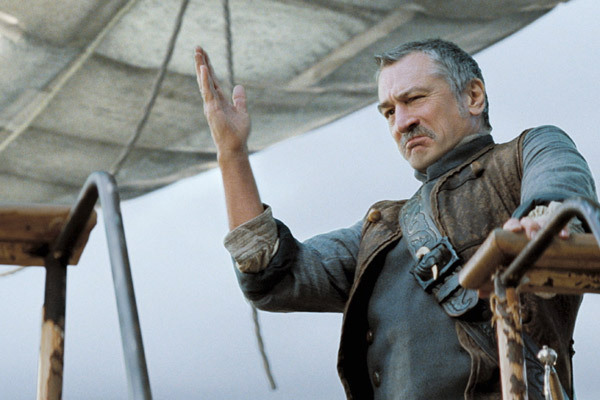
Now that I've mentioned the sky ship, I must also point out the captain, who in the film was called Captain Shakespeare (that was not his name in the novel). He was played by the impeccable Robert de Niro. For me, he is the most endearing, badass and whoopsie character in the entire film, so you can imagine the massive disappointment I was in for when I realized his persona didn't even exist in the novel. It was sad...

The ruthless prince Septimus was also much more charismatic in the film adaptation than in the novel--and he spoke, too! In the novel, he rarely speaks and is always--always--described as crowlike. Every time he appears on the page, expect to see crowlike lurking nearby. Unfortunately for him, Septimus dies both in the novel and in the film. The film had him dying in a magnificent final battle--which, to be honest, felt a bit over the top and Hollywoodish. His death in the novel was shockingly simple: he is bitten by a poisonous snake. I actually partly prefer the novel's way to off this character, because honestly, the film's final megabattle with the witches felt like too much.


Where the novel outdid the film:

The author isn't afraid to show blood and death if necessary. Both in the novel and the film, a unicorn is killed. In the novel, it is much more graphic and the witch later partially resurrects the unicorn for a ritual to find the star. That made for a highly interesting scene.

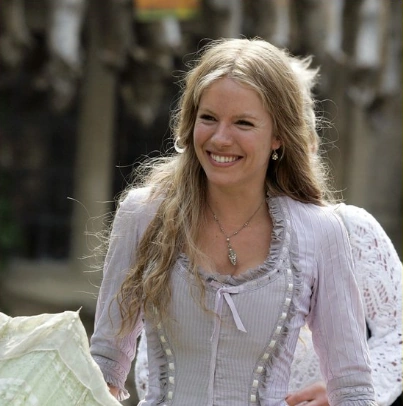
The film adaptation of Stardust portrayed Victoria, Tristran's initial love interest, as a superficial pretty girl and not much else. I was happy to see that she is a deeper character in the novel. She doesn't toy around with Tristran so maliciously, and she is in turmoil during the time Tristran disappears into the land of Faerie. Near the end of the novel, there is an excellent scene where Tristran returns to his hometown and discovers much more time has passed on that side of the wall than in Faerie. He meets with Victoria and she tells him how worried she was and how guilty she felt for making him walk into the magical land to find that fallen star.

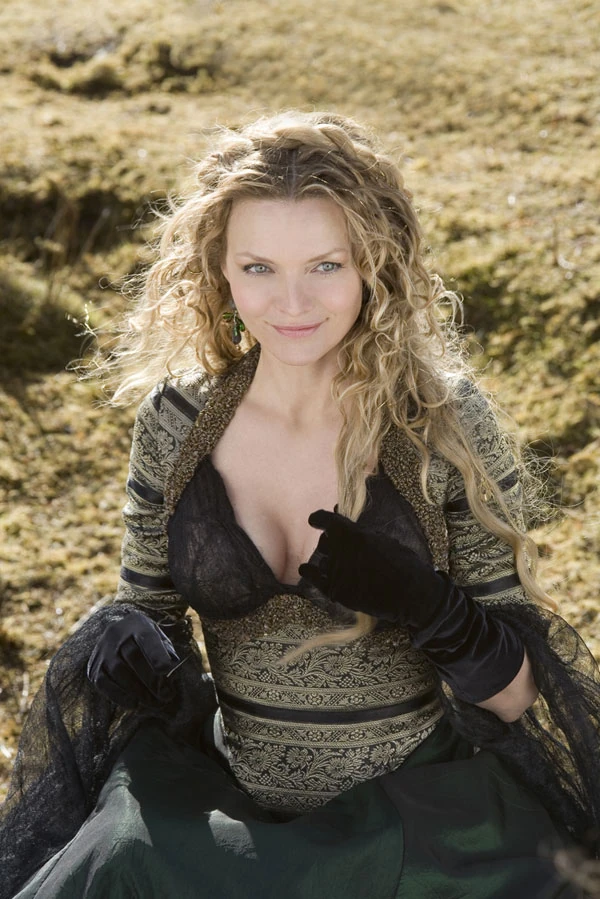
Probably my favorite part about the novel, which I mentioned above, is that there isn't any big final battle between the heroes and the evil witches out to devour Yvaine's heart. That battle, while well-done, felt over the top, as if Hollywood can't fathom having an adventure without a fatal final showdown. In the novel, the main witch defeats herself with her own powers. Instead of having a final battle, the witch consumes all her powers in her search for Yvaine and becomes a frail creature, unable to do anything to acquire the star's heart. Yvaine ultimately takes pity on her.

Overall, in my opinion the film is much superior to the novel. I don't normally say this but good work, Hollywood! The main problem with the book is that I didn't feel I needed to go back to it. I didn't feel that invisible tug drawing me to its pages. While halfway through, I actually left it for over week and had to force myself to get back to it.

Stardust the film receives four Pirates!


Stardust the novel receives two and a half Pirates.

Tuesday, April 19, 2016

Review - The Graveyard Book

When I came across The Graveyard Book by Neil Gaiman it sounded so, so good! Just read this premise and tell me if it isn't right up my alley!

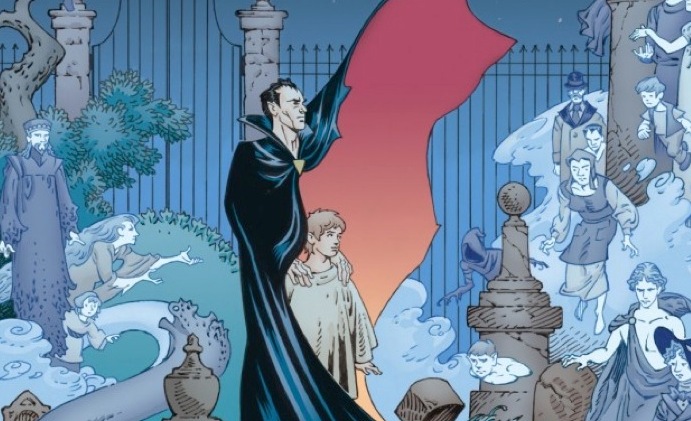
After the grisly murder of his entire family, a toddler wanders into a graveyard where the ghosts and other supernatural residents agree to raise him as one of their own.

This is a story about a boy raised by ghosts! Ghosts! It's The Jungle Book meets Casper! Right? Right?


I wanted to love this book--I really did. But I just couldn't. It's a shame because the dark topic interests me, and the characters were sympathetic. The main character Bod--short for Nobody--Owens is a smart and likable child and as a reader you really care for him. His undead guardian, Silas, is a delicious mystery who quietly dominates every page he's on.

I think my main issue with The Graveyard Book is that I expected a continuous story about how Bod Owens grows up amidst ghosts and other supernatural creatures. Instead, each chapter jumps ahead several years in his life. Each one reads as its own short story, a more or less closed off adventure, and that made the whole book feel disconnected. I know Gaiman was taking a The Jungle Book approach to this story, but it just didn't work for me.

I guess I should've known better, since I read Rudyard Kipling's The Jungle Book several times when I was a teen. Even so, I think The Graveyard Book initially promised something more linear due to how the story is presented in the first chapter: readers are given a terrible crime, a bloodthirsty villain, an innocent victim and a slew of ghosts to protect him. It felt like the perfect setup for one continuous adventure. Instead, we read one chapter focused on how he makes a living friend. Another focuses on how he is kidnapped by goblins. Another focuses on him going to school with the living... In the end, he always returns to the graveyard and to his dead companions, so each chapter has very little impact.

On a positive note, the best moments for me are, without a doubt, when Bod interacts with other living people. In those scenes, you can see how much of an impact life among the dead has had on the boy. The ghosts teach him certain otherworldly abilities, such as fading, and he uses these to his advantage when he's in danger. Perhaps my favorite story is when he attempts to go to a normal school (aka "for the living") and encounters a bully. The way Bod quietly solves his problems is admirable.

There are other bigger and much more dangerous problems Bod cannot solve on his own, and here his guardian Silas takes over--or others such as the witch Liza or the teacher Miss Lupescu.


However, I have a couple issues with this. At the beginning of the book, the ghosts Mr and Mrs Owens adopt Bod. The cemetery dwellers assign Silas as Bod's guardian because Silas is the only one who can step out into the human world (in order to bring Bod food, clothing, etc.). So what do the Owens do during the entire book? Not much, really. Except for the first chapter, they rarely appear, rarely interact with Bod, and are rarely mentioned. I ended up wondering if it wouldn't have been better to just ignore them and hand Bod over to Silas.

My second issue involving Bod's caretakers occurs near the end of the book. Silas and Miss Lupescu go on a quest to defeat the main evil-doers in the story. This part of the plot was so rushed and so glossed over that the significance of events was lost to me. In my opinion, the events involving these two characters--events which lead up to the final battle--could have been shown more clearly so as not to confuse readers.

The ending is highly predictable and the final battle is filled with clichés that I won't begin to list. Let me just point out that the worst cliché, in my opinion, is when the super villainous villain has the upper hand and is about to off our hero, but before going in for the fatal blow he decides to waste time revealing every single important plot point and evil plan to the hero who, once he has all the information, in one fell swoop vanquishes the evil-doer.


I really hate that cliché.

As with Coraline, also by Neil Gaiman, the ending to The Graveyard Book felt rushed in comparison to the rest of the book. I was expecting so much more. It physically pains me. This could have been so great. It had so much potential! Unfortunately, The Graveyard Book gets two and a half Pirates.


Tuesday, April 5, 2016

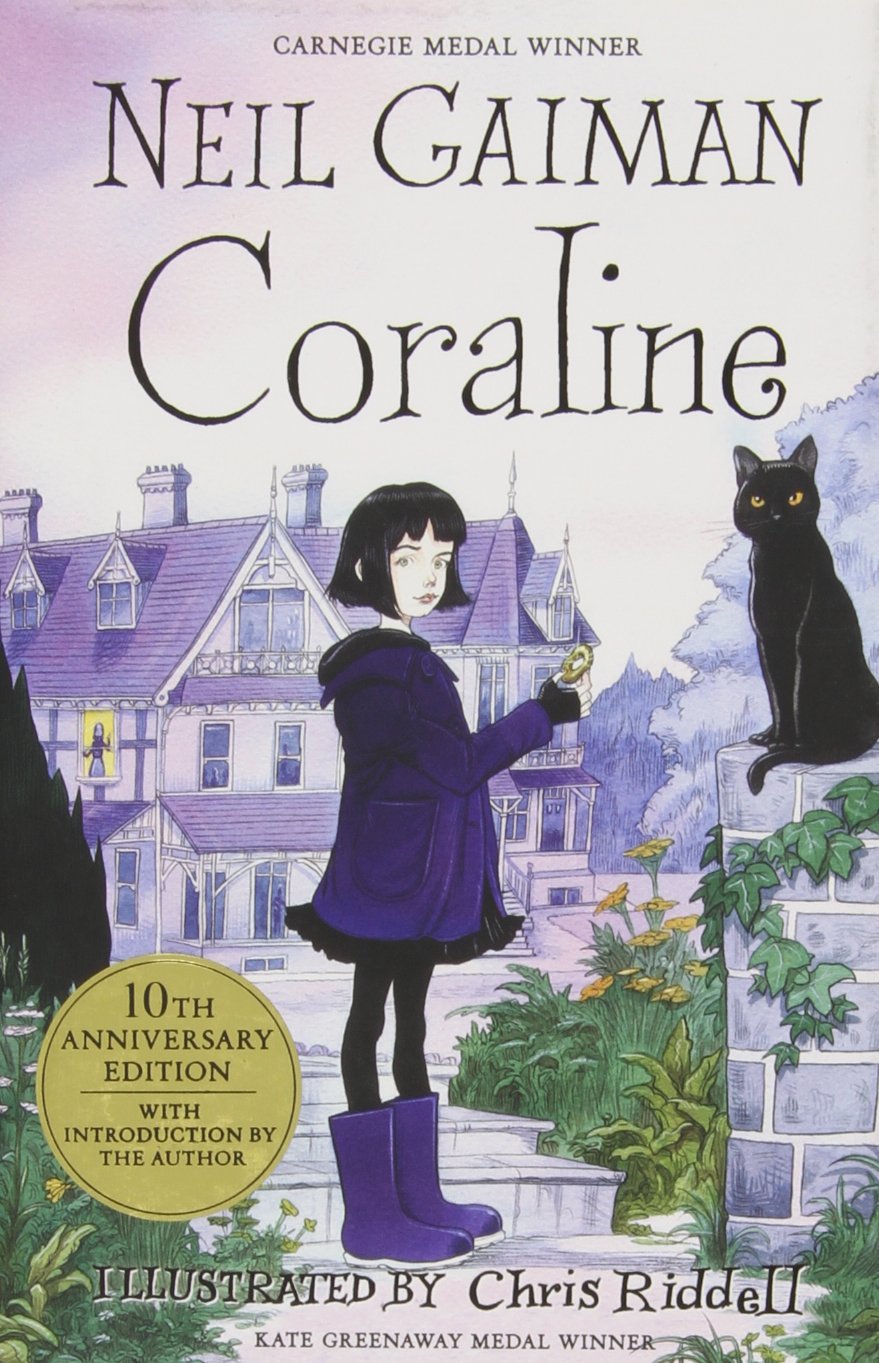
Review - Coraline


Coraline is one of those names I've heard for what feels like ages, but I never knew what the book was about.

I mean, literally no idea.

Ever since I read (and immensely enjoyed) Anansi Boys, I've been on a quest to get my hands on as many Neil Gaiman books as possible. It was about time, too!

Perhaps the best way to describe Coraline is creepy. I wouldn't go so far as to classify it as horror, more like a creepy fantasy. The heroine, Coraline, moves into a new house and she's immensely bored. Her parents don't have much time for her, so she spends the last days of summer vacation investigating the home and getting to know her neighbors--and they're a colorful lot.

But when Coraline discovers a small door into a walled-off apartment in the house, the story takes a dark turn. She crawls through the passageway and discovers another home almost like hers. I say almost, because this home is inhabited by the other mother--a charming woman identical to her mother with the exception of her long-fingered hands and her unsettling eyes. They are two big black buttons.

At first, the other mother (as well as the button-eyed other father) seem perfect. They're cheery and thoughtful and pamper Coraline with all the love and attention she feels she's been missing from her real parents. However, the story takes a sharp turn into creepiness when the other mother tells Coraline that she only has to do one little thing to be happy forever...

"It won't hurt."
When Coraline's real parents go missing, she's forced to confront her fears and embark on a quest to save them before the other mother takes control over her.

I really liked the concept and the creepiness behind the story, especially the part about the button eyes. The overall moral was also a nice, homely one. However, the action felt rushed, like the author wasn't giving us enough time for the plot points to set in. Maybe it's because it's a children's book and sometimes less is more, but I was yearning for just a little bit more.

Even so, being a kid's book, I think it's actually quite scary as is. Maybe a little too scary for some!


After reading the book, I decided to watch the film and was pleasantly surprised by the adaptation. The film incorporates several changes to the plot, the main one being the introduction of a new character, the little boy Wybie.

The reasoning behind including a new character in the film adaptation is so that Coraline doesn't spend the majority of the movie talking to herself. You see, there are many scenes in the book where she is alone with only her thoughts as company (there are also many scenes where she speaks with the cat, who is another important character). Internal dialogue works well on the written page, but on the big screen it could become an issue. An unobtrusive friendly character such as Wybie did the trick, in my opinion--and the appearance of the other Wybie is one of the strongest points for me in the film.

Another great novelty in the film is that we learn a tad more backstory about the other mother. Her motives and techniques are clearer from the beginning of the film. I found the book somewhat lacking on this point.

The ending to the movie was a bit of a letdown, though. To me it felt like it had fallen prey to Hollywoodish clichés and there was really no need to change the witty heroic and original ending which appears in the book. I was highly satisfied with the original ending, as it reminded me of old fairy tales where slyness and trickery save the hero. The film adaptation, on the other hand, ends with a gaudy KA-BOOM along with a dose of deus ex machina.

Overall, I give Coraline three and a half Pirates.


Tuesday, March 22, 2016

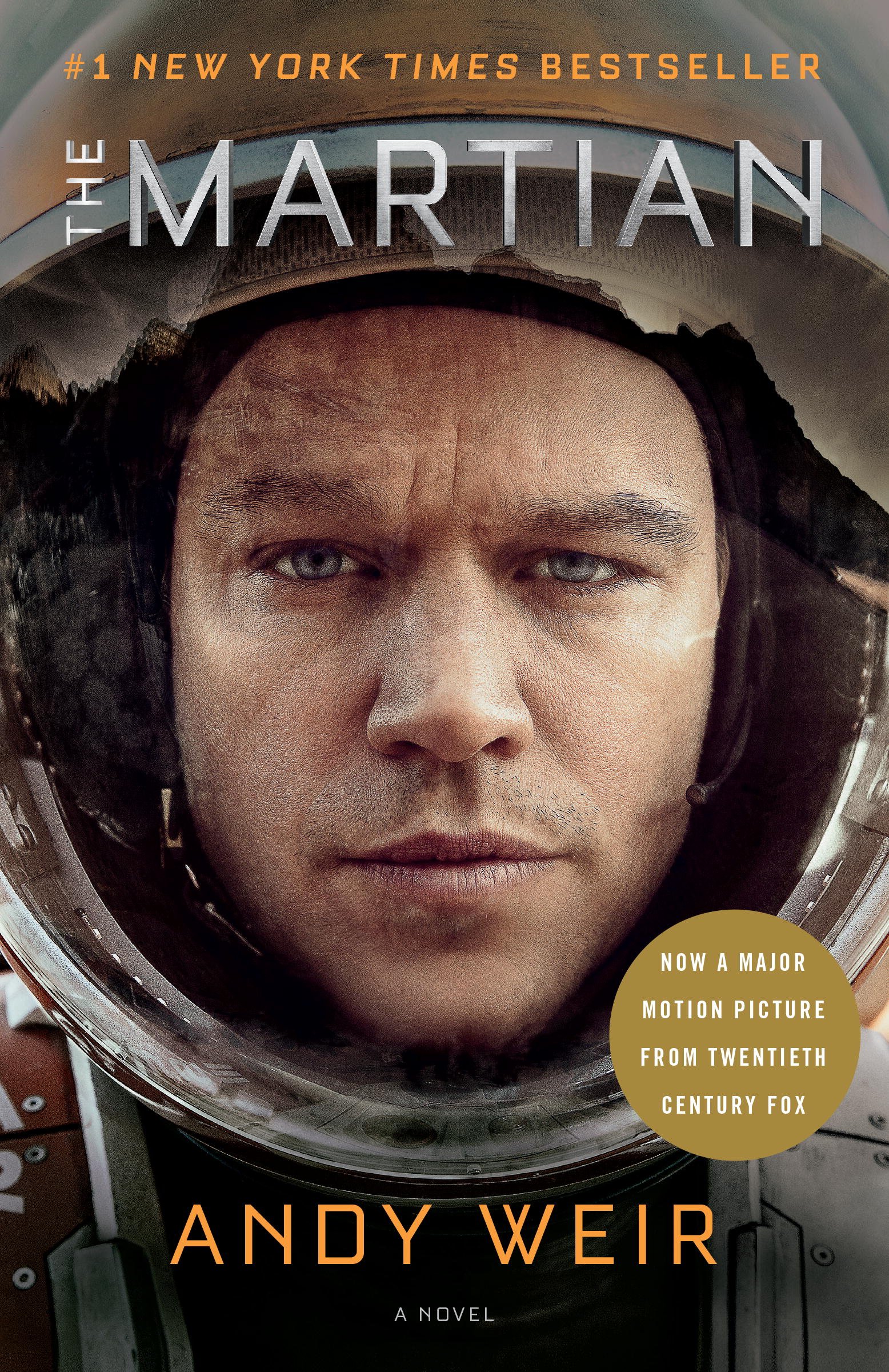
Review - The Martian

This is one of the few times I watched a movie and then read the book. (It's usually the other way around, or I skip the movie version altogether.) I'm sooo happy to say I was pleasantly surprised.

The Martian by Andy Weir kept me entertained throughout, and I kept searching for spare moments to read a bit more. Wanting to return to a book is a great sign. More so in my case because I had already seen the movie and, well, the ending is predictable. There are several events and even lines of Watney's log entries which were mimicked exactly in the film. There are differences, of course, and that's where in my opinion the novel has the upper hand.

Watney is more prevalent in the novel, since most of the chapters are him writing in the system's log, explaining how his day went. Scenes with NASA are his crew mates are short and to the point.

This is excellent if you, like me, feel sympathy for Watney. I mean, sure, he's stranded on Mars, who wouldn't feel sympathy for him, right? Well, Watney can be annoying and immature at times. Other readers on Goodreads have criticized him for his corny jokes and his overall flowery positive attitude. I actually enjoyed his corniness and thought it made him cute.

As for the positive attitude, the way I read the novel, I got the feeling that he wasn't allowing himself to feel despair. He was purposefully shutting off that part of his psyche. There are several moments all the way up to the end where he talks about the possibility of death and he always has a back-up suicide plan in case things go wrong, so I didn't get the impression he was oblivious--just forcing himself to keep a positive mind. That's admirable, in my opinion.

Even though I already knew the details of the ending, there were some scenes that literally gave me goosebumps; scenes involving the solitude of Mars and the possibilities of failure. Those were carried out well, in my opinion.

Nevertheless, not everything was perfect. There were a few things that got on my nerves. The endless mathematical calculations were all right at first, but nearing the end of the novel I just skipped over them. I don't have a mathematical mind, so just skipping all the calculations to reach the outcome was good enough for me. This wasn't really a big problem. It granted the story scientific credibility, even though there were moments when the action was heavily bogged down. I would have preferred more action than calculations, really.

Another problem I had, and this one is more important, is that all the characters in the novel came off as corny and somewhat immature. Their one-liners and little joke wars reminded me of things high schoolers would say--not NASA scientists. I don't think there was a single character who wasn't affected by this novel's overall corniness. This took away some of their credibility and made everyone have the same personality. Watney is a bit more fleshed out, since we see him a lot more, but he's still very similar to everyone else.

Speaking of Watney, we don't know any of his backstory. Nothing. We also don't really get to experience Mars (the sights, etc.). In all the logs we read, he only mentions in passing that he has parents in Chicago. It would have been nice to know a bit more about him than his present predicament. It also would have been nice to visualize the planet more.

Complaints aside, I still enjoyed The Martian immensely and I'm glad I both saw the film and read the novel.

I give The Martian four out of five Pirates!

Tuesday, March 15, 2016

Review - Barcelona Adult Coloring Book

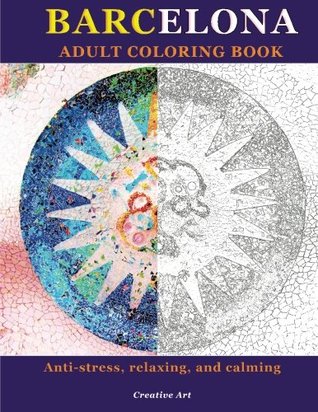
Barcelona Adult Coloring Book by Alexandru Ciobanu is a wonderful idea--just fabulous! Imagine coloring in all the Catalan works of art! Those mosaics! Those buildings!

If you know a little bit about me, you probably already know I live in the Barcelona area. I love this city, its history, its architecture, its daily bustle...

M'encanta Barcelona!

I received a free PDF copy of this book from the author through a Librarything giveaway, all in exchange for an honest review. Here goes the honest review.

When I saw the listing for this book on Librarything, I practically tripped over my own fingers in my haste to click to enter the giveaway. As I live near Barcelona and am a huge fan of the city, I couldn't wait to get my hands on a coloring book dedicated to my beloved Ciutat Comtal.

Unfortunately, I wasn't so happy when I looked inside. The photographs are excellent. The color and angle of each photo is exquisite. The so-called drawings, however, leave much to be desired. I refer to the drawings as "so-called" because, while the book's Amazon description uses this term, in reality the images given to us to color are no more than the result of filtering the photographs.

The filter used resembles the pencil sketch filter you can find on Photoshop. Here's a quick tutorial by Lesa Snider on Macworld on how to transform any photograph into a pencil sketch. As you can see, the process isn't too difficult once you have an idea of how Photoshop works. (I personally used to mess around with the program's filters for hours and hours.)

I don't see any problem with using a filter to modify the original photographs and turn them into something someone can color in. However, while looking through the coloring book, I felt it had been put together with haste. In general, the filtered images contain residual dots and lines that should have been cleaned up to make coloring them easier. Take this image of the antenna at the Parc Olímpic, for example:

Part of the original photograph.
Part of the image to color in. The sky around the antenna
hasn't been cleaned up, so we can see remains of the thin clouds
and airplane trails, which give the image an unfinished feel.

This happens throughout the book. Other photographs contain segments which are slightly overexposed, or too dark. The filtered image can't capture the lines if the original is too light or too shadowed, so we have sections where we encounter white spaces. For example, look at the filtered image of the mosaic on the book's cover:

The section on the left is lost
through the filtering process.

Overall, I'm sad. I so wanted to love this book. The idea is wonderful. The original photographs are excellent. The drawings are disappointing. In my case, instead of relaxing, I found them a bit frustrating and I realized my heart rate was going up while attempting to color them because I couldn't ignore the fact that they all looked dirty. There are a couple close-up images of mosaics which are just beautiful, and these work very well to color in.

Gorgeous!
Even so, just compare Barcelona Adult Coloring Book to Fantastic Cities: A Coloring Book of Amazing Places Real and Imagined by Steve McDonald, and you'll see a huge leap in quality.

In conclusion, with a little more touching up, Barcelona Adult Coloring Book could be a great pastime. Unfortunately, the way it's available right now, I can't give it any more than two and a half Pirates.


Tuesday, March 1, 2016

Review - Anansi Boys

If you've read my previous post, you'll know the very first book I finished in 2016 left a sour knot in my gut. Fortunately, I was reading another book at the same time, Anansi Boys by Neil Gaiman, and the adventures within its pages managed to wash away some of the frustration caused by The Boy in the Striped Pajamas.

Anansi Boys is immensely engaging from page one, I deeply enjoyed this story and its characters, from the old trickster Anansi to the victim-turned-hero Fat Charlie and even his suave and egotistical brother Spider. It's full of magic, of gods, and of adventure.

Readers can quickly sympathize with Fat Charlie's plight. He's the mild-mannered son of Anansi, the Spider god. Raised in Florida, Fat Charlie (who isn't really fat, but his father made up that nickname and it stuck) escapes to London the moment he has a chance. But when he receives news of his father's death, he must return to Florida and confront his past.

Fat Charlie's past involves a brother, one he didn't even know he had. When Spider, the long-lost sibling, shows up at Fat Charlie's home, things begin to get out of hand. Spider takes over everything in Fat Charlie's life; he causes complications at his workplace, makes himself his own magical bedroom (hot-tub included) in Charlie's closet, and even shows interest in Charlie's fiancée, Rosie.

Spider screws everything up for poor Fat Charlie, but I still adored him! In my opinion, this is the best aspect of Anansi Boys: no matter how much the brothers try to provoke each other's demise (and believe me, they do!), I still fell fully invested in each one.

As the story progresses, more and more elements of African folklore creep into Fat Charlie's surroundings. He decides he has to get rid of Spider once and for all before his life is officially ruined. I don't want to give anything else away, so you'll just have to read and see where the brothers' antics take you!

The only downside is that the resolution felt rushed and devoid of the magic I'd grown so accustomed to throughout the story. Nevertheless, Anansi Boys is a fun addition to my library, and one I'll surely read again.

Anansi Boys gets four out of five Pirates!


Tuesday, February 23, 2016

Review - The Boy in the Striped Pajamas

Well, my 2015 Reading Resolution was a huge bust. I managed to read all 18 Fullmetal Alchemist books, but not many others from my list... *Sigh.*

The year 2016 started off on the right foot. All the wedding preparations are behind me, so that takes a lot of pressure off my back!

Okay, I just said this year started off well, but the truth is the very first book I read in 2016 made me furious. And not because of the harrowing subject matter itself (the Holocaust), but because of how the author disrespected this subject and...well... any reader's intelligence.

The first book I read in 2016 was The Boy in the Striped Pajamas by John Boyne.

**This review contains SPOILERS.**

I've had this book on my "to-read" list for a long time, so when I recently saw it in the bookstore I thought "what the heck." After reading it, I can't fathom how so many people call it a masterpiece.

For starters, the children in the book read more as around six and eight years old instead of the supposed nine and twelve. Bruno, the German main character, is so naive that one cannot help but wonder if he suffers from some sort of mental retardation. I'm not saying this out of malice; I truly wondered if the author meant to portray him as a child with mental difficulties. I suppose the author wanted to show innocence and lack of malice, but it quickly became irritating and patronizing to children. Children aged nine are simply not as oblivious to the world around them as Bruno, and the way the author depicts children makes me think he doesn't have a very high opinion of them in general.

Moreover, with Bruno being the child of a German commandant in charge of Auschwitz, he should know basic concepts such as "Jew" or "Heil Hitler." Instead, he seems oblivious to absolutely everything. I would expect a German child--son of a commandant no less!--to receive a strict fascist education from the get-go. Perhaps already be a part of the Hitler Youth Groups. Instead, all this is overlooked and Bruno doesn't even know the meaning of "Heil" or who "this Hitler man" is.

Another downside in the book was the multiple play on words which only work in English, even though the characters are supposed to be speaking German. Bruno's use of "Out With" instead of Auschwitz gets old very fast, as well as the use of "Fury" for Führer. These mistakes just don't work because these words are completely different in German so the play on words only makes sense for English speakers. Even so, they're hammered in throughout the book and Bruno even has whole conversations about how he mistakes words--conversations about mistakes that are actually impossible for him to make!

Finally, the last straw for me was when Bruno mistakes the prisoners of Auschwitz for holiday-goers. I couldn't believe what I was reading. I kid you not: Bruno believes the people inside the metal fences aren't doing anything because they're "on holiday." The author, in my opinion, has gone too far. No child aged nine is so self-centered, blind and unobservant. Any child living in those extreme surroundings would be awake enough to know something isn't right. Sadly, this isn't the case for our dear Bruno.

The final pages of the book have been described as a "whirlwind." I feel (just a bit) like a horrible person for saying this, but the moment Bruno decided to cross the fence into the concentration camp, I was looking forward to his death. Even that fell flat. None of the characters were engaging and the piece ended up centered around an annoying boy living his oblivious privileged life until the final paragraphs, where we began to see some of the horrors the prisoners endured. But even then, everything was from Bruno's blundering point of view, and that felt immensely disrespectful to the true victims of the story.

In conclusion, The Boy in the Striped Pajamas felt like a mockery. The arguments "it's from a kid's point of view" and "it's meant to be a fable" are irrelevant to me. I found it offensive and distasteful on so many levels, starting with the way it misrepresents children to the way it skims over the victims of the concentration camp--don't forget that the second main character is a child living inside the concentration camp (a small child who, by the way, would have most probably been sent to the gas chamber during his first month there).

If you're interested in Holocaust stories, do yourself a favor. Skip The Boy in the Striped Pajamas and head straight for a true story, a Pulitzer winner, a masterpiece: Maus by Art Spiegelman.


The Boy in the Striped Pajamas frustrated and outraged me so much that I'm going to give it zero Pirates, which is really a shame because just look at that cute widdle face!


Related Posts Plugin for WordPress, Blogger...