Showing posts with label On Writing. Show all posts

Thursday, February 18, 2016

On Being a Swiss Chard and Rambling About It

As a lifelong writing aficionada, I often wondered how writers do it. How do they give life to characters who are so different from them? Or are there writers who live vicariously through their characters' feats, even if the character is a downright scoundrel?

Take, for example, the character William Hamleigh from The Pillars of the Earth. This is a disgusting, loathful man, the epitome of villainous creatures (who several times in the novel walks the fine line of becoming a caricature). He rapes, he maims, he kills, and he enjoys it all tremendously. But does this show us who the author is?

There's an expression in Catalan which I particularly like: ets una bleda. Literally, it means "you're a Swiss chard." Figuratively, it means that you need to grow a backbone.

Well, when it comes to animal suffering I'm 100% bleda--spineless. I've cried rivers over all sorts of animals and had several nightmares where I wake up in a sweat and trembling like an absolute bleda. The first nightmare I remember having in my entire life involved my kitten getting flushed down the toilet. Another time, more recently, I was a factory worker in charge of snapping geese necks. Yet another time, I was a journalist following the story of a homeless man who would chase stray kittens, impale them, and eat them.

Awful, graphic stuff. So when I came across a dying kitten in the street, of course I scooped him up and rushed him to the vet. Of course I took him home and together with my husband Salva brought him back to life. Of course I cried for sleepless nights (the kitten had an awful habit of scratching his eyes at night and making them bleed--good thing we have a 24-hour veterinary hospital on our same street). And of course I acted like such a bleda that I even hurt my back (lumbago out of stress) and had to miss work.

All better now!
My feelings towards animal suffering are strong, but is that also true for my characters?

While Eneld Cross, biorobotics engineer, is quick to recite the Animal Protection Act, lovable sidekick Seth has a disturbing hobby of scooping out rat brains and inserting them into robot carcasses. Tristan Cross really couldn't care less about animal rights because he's got too many problems on his mind already, and the demonologist Robert Westbrook has performed acts of cruelty both on animals as well as humans--and demons.

Does this make me love them any less? Nope!

Let's return to Ken Follet's The Pillars of the Earth. There is a notorious scene in which the most villainous of villains revels in torturing a cat, I believe to death. My memory is fuzzy because once I saw where the action was heading I skipped the scene altogether. The graphic nature of the chapter was enough to make me want to stop reading the novel. Are Hamleigh's actions a reflection of Follet's beliefs or values or desires, or whatever you want to call it?

And what about the master of killing sprees? If you've ever read any of his work, you won't be surprised to know George R.R. Martin adores cats. Too bad most of his characters are mere humans! Even though his books are written in blood and several main animals and humans die, no cat comes to any harm. Arya chases cats for agility practice, but the kitties only receive a kiss on the nose once she catches them.

Sometimes I wonder if my characters' actions are, in some way, a reflection of myself.  If you've ever read any of my work, you'll know my protagonists are far from perfect. Tristan is foul-mouthed and has blood on his hands. Eneld, the "good brother" is a womanizer and starts off the series with a drug abuse problem. And these are the heroes--the ones we sympathize with! Antagonistic characters such as Robert have planned and done much worse (just have a look at The Soul Distillery).

To be honest, I haven't done any of the things my characters have (no murders, demonic worshipping or drug abuse over here, Your Honor!), but it's so darn fun to write about them!

So, maybe because I'm a Swiss chard in real life, my characters do the things they do.

What about you? Do your characters reflect parts of your personality? Do your characters show personality traits you find annoying, disrespectful, loathsome?

Sunday, March 15, 2015

2015 RR - The Vision by Dean Koontz

I'm no Dean Koontz fan, but I somehow ended up with four or five of his novels in my home library. The third book I tackled for my 2015 Reading Resolution is The Vision. For the life of me, I couldn't find an online image of the edition I have (a 1987 reprint), so I took a picture myself.

What can I say about this book? Hmmm... Uh... It reads quickly? I actually abandoned it several years ago due to the painful dialogues, and only read it now to complete my resolution. Needless to say, I didn't enjoy it.

Plot

Mary, best-selling author who lives with her new husband Max in Bel Air, is a clairvoyant who visualizes murders before (and sometimes while) they occur. She helps police intercept the killers before they can continue their rampage. However, one day Mary's visions change: she can feel the pain of the victims and she fears for her life. It seems the murderer knows she's observing him, and is after her.

Pros

A quick, effortless read.

Cons

There are so, so many things I didn't enjoy about this book. For the sake of brevity, I'll give you a list of my top peeves.

1) The story itself it crammed with clichés up until the final showdown with the villain, who (of course) takes the time to give a fully detailed recount of all his antics and motives before swooping in for the final kill.

2) The characters feel like paper cutouts and constantly share "as you know, Bob" conversations. It's ridiculous to read page after page of characters explaining things to each other--things they both already know! There has to be a more elegant way to transmit back story. I'd prefer a simple narrative paragraph every now and then instead of having the characters talk to each other like they're all going through acute bouts of amnesia.

3) The writing style itself is sometimes irritating. In this novel, Koontz seems to have developed some sort of allergy to conjunctions. What happened to the humble "and"? Gone. Here are some examples:

     - He sat up, switched on the lamp, looked around the room.
     - He let go of her wrist, pushed his hair back from his forehead.
     - At last the intense, dark-skinned young man stood up, helped the blonde to her feet.

I wouldn't mind if these parallel structures appeared every now and then, but here we're talking about page after page.

4) Another problem I have is the amount of scene breaks. The novel feels like it was written for a TV drama. We get two paragraphs, scene break, two more paragraphs with the same character five minutes later, scene break. Is it really necessary to cut scenes every time a minute goes by? Where's the flow? Just have a look at page 189 of my edition:

  7:00 P.M.
     Mary squeezed Max's hand and waited tersely. Any minute the walkie-talkie would crackle with a report from one of the deputies. [One more longish sentence.]
  7:03.
     Mary repeatedly glanced at her watch in the back glow of the police cruiser's headlights. She shifted restlessly from one foot to the other.
  7:04.
     For the first time in more than an hour, Chief Patmore looked at her, met her eyes. He wasn't happy.
  7:06.
     She was beginning to feel that she had been outmanoeuvred, outwitted. [Two more sentences.]
  7:09.
     She was numb with fear. "Something's wrong," she said.
     "What is it?" Max asked.
     [Scene continues for a very brief conversation and then we cut again to 7:30.]

In this case, the cuts are meant to increase tension, but come on. I just--I just can't. No. Really. I can't.

5) The author attempts to slip the reader a big fat red herring, but in my opinion fails miserably. So much attention is drawn to a single character in an attempt to make the reader think he's the culprit, that it quickly becomes uncomfortable and embarrassing.

The Vision is one of Koontz's earlier works--but not his first. Have another look at that cover. Yeah, it boasts he's the author of Strangers and Darkness Comes. Inside the book, we have a list with a total of seven Koontz titles. So, The Vision might be an early Koontz novel, but with seven others under his belt, I would hardly call it the work of an amateur.


*Sigh*

I'm not a big fan of giving bad reviews, but I can't lie, either. At least it's a quick, mindless read.


Bonus rant round!

Take a load of this conversation from page 20:

     "What a mayor you are," [Harry Oberlander] said with heavy sarcasm. "Hiring a witch to do police work."
     Henderson responded like a weary giant spotting yet one more tiny challenger with delusions of grandeur. "She's not a witch."
     "Don't you know there's no such thing as a witch?"
   
What did I just read? Oberlander accuses Henderson of hiring a witch. Henderson responds that she isn't a witch. Oberlander reminds Henderson that witches don't exist. Then why does he even accuse Henderson of hiring a witch in the first place?


Final round: The Longest Sentence in the History of Sentences

I'm not saying this sentence is bad. It does its task perfectly and really sets the scene. Do you want to read it? Do you? It contains spoilers, so only proceed if you dare.

Pages 244-245:

     Even before he completed the thought, the knife ripped into him, rammed out of darkness and into him, felt like the blade of a shovel, enormous, devastating, so devastating that he dropped the gun, feeling pain like nothing he'd ever known, and he realised that the killer had pitched the flashlight aside as a diversion, hadn't really been hit at all, and the knife was withdrawn from him, and then shoved hard into him again, deep into his stomach, and he thought of Mary and his love for Mary and about how he was letting her down, and he grappled with the killer's head in the dark, got handfuls of short hair, but the bandage came off his finger and the cut was wrenched open again and he felt that pain separate from all the others and he cursed the sharp edge on the car's jack, and the flashlight his the floor ten feet away, spun around, cast lunatic shadows, and the knife ripped loose from him again, and he reached for the hand that held it, but he missed, and the blade got him a third time, explosive pain, and he staggered back, the man all over him, the blade plunging again, high this time, into his chest, and he realised that the only way he could hope to survive now was to play dead, so he fell, fell hard, and the man stumbled over him, and he heard the man's rapid breathing, and he lay very still, and the man went for the flashlight and came back and looked down at him, stood over him, kicked him in the ribs, and he wanted to cry out but didn't, didn't move and didn't breathe, even though he was screaming inside for breath, so the man turned away and went towards the arch, and then there were footsteps on the tower stairs, and, hearing them, he felt like such a useless ass, outsmarted, and he knew he wasn't going to be able to recover his gun and climb those stairs and rescue Mary because stuff like that was for the movies, pain was pulverizing him, he was leaking all over the floor, dripping like a squeezed fruit, but he told himself he had to try to help her and that he wasn't going to die, wasn't going to die, wasn't going to die, even though that was exactly what he seemed to be doing.

And that's it for The Vision! I haven't had much time to post on the blog recently, but I have had time to read. I just finished the fourth book in my 2015 Reading Resolution list: The Princess Bride. Well...I finished the main story but still had to read the epilogue of sorts, and then my cat puked on the book so now I'm not sure if I actually got the nerve to finish those last pages...

Wednesday, March 12, 2014

The Future in Sci-Fi

Bringing unibrows to a whole new level.
As a kid, I loved Star Trek, Deep Space Nine. My fondest memory is of Quark's Bar. And it wasn't just that the bar was owned by two of the cheekiest back-stabbing alien brothers, Quark and Rom. It was also because, even though the series portrayed the unusual sci-fi situations, we viewers always knew there would be a place where everyone could unwind and raise a steaming glass of rainbow vodka.

Because people, even intrepid 24th-century astronauts living in the middle of who knows where, still need those little terrestrial pleasures.

Lately I've been asking myself: How far has mankind really come? Sure, we've made remarkable breakthroughs in the last couple centuries in many fields, but have we really changed that much? Have we evolved as much as we think?

All these questions arose some while back when I received a certain critique through Critique Circle. In a nutshell, the critiquer urged me not to have my main character drink beer. Because this character was living 200 years in the future, he had to drink something exotic and hard to pronounce.

I can't agree with that advice.

Let me give you a little bit of context: Serving Time takes place a little over 200 years in the future. In this time period, mankind has left the confines of planet Earth and many thousands of people are living in space colonies. The moon has more or less been colonized (mainly for research), and Mars is a terraformation disaster.

From the very start, I knew I wanted the technology surrounding my characters be no more
than a backdrop. Serving Time is character-driven, so the story relies on the characters in order to move forward. Of course the story is littered with sci-fi technology: Tristan is an interplanetary pilot while his younger brother Eneld is a biorobotics engineer. However, while their professions are without a doubt character traits, they don't define the heroes.

While sharing chapters of my novel with my writing buddies, I sometimes received kind suggestions to make certain things more "futuristic." I remember the characters' food was one of those things on the list. But I honestly don't get it. Why should my character eat a monkey brains and mustard sandwich instead of a delicious roast beef? Because he lives in the future and everything's weird over there? Okay, in Serving Time there's a character who actually enjoys tentacle sandwiches and spicy octopus and tomato soup, but that's his personal problem and he's working on it. Plus, I also enjoy my share of tentacles so who am I to judge.

Heaven on a plate!
In Serving Time, Tristan and Eneld drink beer. They button up their shirts. They eat bread with tomato (the typical Catalan way--see image). Why shouldn't they? Oh, because they live in the year 2225? What difference does that make? Beer has been around for about seven thousand years, so why shouldn't it still be a popular drink two measly centuries into the future? The first buttons (used for decorative purposes) date back to around three thousand years ago, so why shouldn't they live on during the space age (along with other fastening methods, of course)?

Tristan's piloting a positron reactor cruiser, for crying out loud! Let the man kick back and enjoy a cold beer while he watches E-Wok: Cooking with the Pros and scratches his unmentionables.

I guess my opinion on the matter is:

If it ain't broke, don't fix it.

And here's where I have my gripe. It seems that some sci-fi authors can't conceive of a world where a phone is called a phone, and a car is called a car. Everything has to have a high-tech, sometimes unpronounceable, name because "Hey! In case you forgot: we're in the future!"

In my opinion, this draws attention to the technology, not the story. That might not be a good thing. I vividly remember one disgruntled Amazon reviewer complaining about a sci-fi author's complete lack of regular words. Every single object the characters interacted with required an obscure techie name.

"Why can't a watch be called a watch?" the reviewer said, and he was right. Objects evolve as our technology evolves, but many names stick. Pocket watches from the early 16th century look very unlike our modern-day watches, yet the name persists. So why shouldn't these details survive into a futuristic sci-fi setting?

Think of the daily objects you interact with... Drinking glasses, forks, knives, and spoons... How many of these are centuries old, yet they still persist and are still part of our day-to-day along with i-Phones and self-parking cars? I'm not saying these objects won't evolve or even fall into obscurity over time, but why should we immediately disassociate them from a sci-fi setting?

So what do you think? Out with the old and in with the new? Or if it ain't broke, don't fix it?

Friday, March 7, 2014

I'm still here!

Hello everybody!

*Runs in flailing arms over her head.*

I apologize for my disappearance! It's been just over three months since the last time I published a post. Wow! Since when did time go by so quickly?

So, let me give you an informal update on what's been happening. Bullet points might be useful here, since I have been known to ramble...

  • I'm getting married next year. Salva and I have just started the preparations and I'm already completely stressed out. We've been searching for restaurants for the reception, and so far we're leaning towards a place called Can Traver. We still have to go see it and speak to the wedding organizers there. You can see beautiful pictures of the old Catalan mansion here.
  • My current novel, Making Time, is complete. The first draft, that is... As us regulars in the CC Progress Report Thread always say: "there will always be edits." And that's precisely where I am right now: so deep in edits I'm wondering if I'll ever be able to get back out. Several rewrites are in order, and just knowing what I have to do is twisting my guts in a very unpleasant way (as if there would be a pleasant way to experience gut-twisting...). Hopefully, Making Time will be ready for publication sometime this year, though I prefer quality over speed, so we'll all just have to sit tight.
  • Apart from the novel series, I've also been working on three short stories--prequels--which I also hope to release some time this year (if all goes well and I can finish the darn things!).
  • Finally, and this announcement is coming embarrassingly late, I'm proud to announce that my second NaNoWriMo experience was a complete success! I completed the 50k on November 15, one day later than last year. I admit I started out NaNoWriMo this year with a lot of self-doubts and hesitation. Fortunately, things worked out much better than expected. An entire month of nothing but mindless writing and furious plotting ended in 82,600 words. The novel I worked on is Out of Time, the third book in the Timemakers series.


So that's the update for now. I really can't believe so many months have gone by. I'm a scatterbrain, really, and when I focus on something I tend to block out everything else. Lately, all my focus has been directed toward Making Time.

Here's to new posts!

Friday, June 28, 2013

Creating a Successful Goodreads Giveaway

What is a Goodreads giveaway? What can it do for you?

Goodreads is a great place to meet books, readers and authors. One of the best tools the site offers is the giveaway program. I have to admit, Goodreads might seem difficult to manage at first. It's got to be the least intuitive website I've ever come across, so it took me several months to build up the courage to use it on a daily basis. However, once I learned the basics, there was no going back!

Ever since Serving Time went live on May 2, I've been trying out different marketing methods (sort of like poking a stick around in the dark). On the different writers' forums I lurk, many people had pointed out the benefits of hosting a book giveaway on Goodreads, mainly: READERS WILL KNOW YOUR BOOK EXISTS.

This is crucial! If nobody knows your novel is out there in the world, nobody will buy it. As easy as that. So, by hosting a giveaway, we can get hundreds and hundreds of eyes on our book.

Here's what you should do:

Set up your Goodreads author page and submit your book listing. You will need the ISBN for this. Your page might take a day or two to go live, and once it does, you can play around adding links to your blog, to Twitter, and other sites. If your novel hasn't been published yet, you won't have a cover. You can upload a cover image, or a cover teaser. For the first few weeks, this was my novel's image:


Get ready to list a giveaway. You can find the giveaways by clicking on the "Explore" button at the top of the Goodreads bar, and selecting "Giveaways." You'll see a page with the different books being given away. Using the tabs, you can see what giveaways are ending soon, which novels are the most requested, which are the most popular authors, and which giveaways have been recently listed. If you scroll down a little, you can also browse by tag (the tag links appear in a list on the right), which means that you can search for a giveaway by genre.

Scroll back up to the top and you'll see a link on the right called "List a Giveaway." Bingo! The form you need to fill out is quite simple, but be sure to write a compelling description and to use useful tags to define your book. You can also watch a video tutorial on how to make a giveaway, right on the same page.

Goodreads giveaways are exclusively for print books.This means you will have to mail a copy of your book to the winner. There are two things you can do here: buy a copy through Amazon and send it to the winner's address (which means they will receive the shipment straight from Amazon), or buy the copy yourself (through Createspace), sign it, and then ship it. Personally, autographed books are much more appealing, but the choice is up to you.

Before creating my giveaway, I checked out several blogs for advice. Some of the advice was contradictory (for example, some suggested giving away several copies to entice more entries, while others suggested giving away just one copy and doing more giveaways in the future), so you need to make your decisions based on what you think is best. Here are some of the sites I visited, and which I found very helpful:


The main advice I followed is:

- Select a period of several weeks. If you are just starting out as an author, don't expect people to flock to you. They've never heard about you. It's tough, but it's the truth. By running the giveaway during a three or four-week period, we give people more time to discover our work and enter to win.

- Choose an unpopular date as your ending date. You'll have to browse through the giveaway pages for a while, but this piece of advice is totally worth it. Imagine you choose July 14 as your ending date, and there are 25 other book giveaways ending on the same day. Your listing might never make it to the front page! Fewer people will probably see it, so you might get fewer entries. If, on the other hand, you end your giveaway on a Goodreads "slow day," you'll assure maximum visibility when the giveaway is coming to an end.

- Make the giveaway description compelling. This is a vital point, and it's all up to you!

- Accept entries from all over the world. While filling out the form, you need to choose what countries can participate in the giveaway. By selecting worldwide access, you let more people know about your book. I know some authors might be hesitant to select this option, in case the winner ends up being from a remote country. Well, I think this is a risk we have to take. The majority of Goodreads users are in the US, so chances are the winner will be in US territory. However, there are many of us living outside the US! In my case, I would have preferred shipping solely to European countries, but that would have blocked out hundreds and hundreds of entries! Be fair, give everyone a chance to win--and to know your book. :-) 

- Once the giveaway has begun, use social media to your advantage! Blog about the giveaway (Goodreads offers a free widget you can place on your blog), have others blog about it, tweet about the free book, post about it on Facebook, on forums... Create an event on Goodreads and invite all your friends. People will rush to sign up!

- When the giveaway comes to an end and the winner is announced...SHIP THAT BOOK! You're giving quality service here, so you want happy winners.


Here is my own experience:

I decided to go for a month-long giveaway, partly because I wanted to draw a larger audience by giving people a longer time to enter, and partly because I was a tad scared. I checked the giveaway calendar and chose a ending date with few novels (June 7). This way, I assured my novel would appear on the giveaway front page for a longer time.

Without any doubt, I decided to give away just one signed copy of my book. If you check the links above, you'll see some suggest giving away 20 or 30 copies. Well, if you can handle the costs, go for it! In my case, and since I had never listed a giveaway before, I preferred to start small and see how things would go.

One of the giveaway advice sites I visited qualified the self serve ads as "a must." However, other authors I spoke to said their results were zilch. Curious to see what it could do for me, I decided to buy a self serve ad on Goodreads and link it to the giveaway. Self serve ads are cheap and quick to set up. The link is somewhat hidden at the very bottom of the Goodreads page ("Advertise").

The ad did nothing. I think it got about 11 clicks during the whole giveaway. Luckily, the ad keeps running until the funds run out, so now it's been several weeks since my giveaway ended, and the advert is still showing up on Goodreads--and it can be updated at any time. It's receiving many more clicks now than when the giveaway was active.


So, back to the set-up process: once I had selected my dates, I chose worldwide entries, prepared the blurb, and clicked "publish." The giveaway went live the next day and immediately started receiving hundreds of entries.

However, things slowed down for the two weeks in the middle. This was a logical dip in entries, since the novel was buried deep in the giveaway pages--but no worries! When my giveaway ending date approached, entries soared again.

Overall, the giveaway results blew me away! I received over 1200 entries, and about 560 people added Serving Time to their "to-read" shelf! This was double my expectations! I sent the winner a quick message congratulating him on the win, and telling him what day his free copy would ship.

Since the giveaway ended, things have been quiet. I've received a few ratings and one or two reviews. Still, I'm satisfied knowing my novel was in front of so many people, and maybe it managed to spark some interest. Who knows, maybe some of the people who have it on their "to-read" shelf end up buying a copy some time in the future.

In conclusion, Goodreads giveaways are a 100% recommended adventure! Just the thrill of seeing so many people interested in your novel is enough reason to host one ASAP!


Friday, April 19, 2013

Got Inspiration?


Calvin (don't you just love him?) might be trying to procrastinate his way out of a school project, but he still has a point. Creativity requires a mood; it needs a spark of inspiration. But what do you do when inspiration refuses to light up?

You go find some kindling, that's what you do!

Here are eight links to help you out if you ever need some extra help recovering your inspiration.

1) Litbridge Creative Writing Prompts

This is an incredible site with literally thousands of writing prompts. What I enjoy most about it is that it classifies its prompts into clear categories. We can find categories for different holidays, periods of the year, even categories such as "animals", "the universe", "road trips" or "zombies" (I found this last one contained especially creative ideas!).

2) Daily Writing Tips - Writing Prompts 101

Here you'll find an interesting article on writing prompts, and several links to prompts, too!

3) Writer's Digest Writing Prompts

Writer's Digest offers fun weekly writing prompts.

4) Writing Prompts

This site is simply called that: Writing Prompts--but don't let its simple name fool you. You might just crack a smile at all the illustrated prompts hiding in here. I especially liked Dr. Who meeting Disney's Belle.

5) Creative Writing Prompts

This is a very simple website: just hover over one of the numbers and you'll receive a short prompt. The ideas here are short and clear, for example "Write about someone you'd love to see in jail". However, if you stretch your creativity a little, I'm sure you can turn that one-line prompt into a complete story.

6) Poets and Writers - Writing Prompts

The website Poets and Writers offers prompts for poetry, fiction and non-fiction.

7) Writing Forward: 25 Creative Writing Prompts

Here you'll find exactly what the link says.

8) Warren Wilson College - 20 Creative Writing Prompts

This post contains 20 prompts and challenges. Writing challenges involve creating a short text following certain rules (you have to use a certain amount of words, your sentences have to begin a certain way...)


I hope these links help you if you ever have trouble coming up with something to write!

Writer's block can be avoided. When you feel its cool breath drawing goose bumps on your nape, remember this:


Tuesday, March 12, 2013

Homophones: Those Tricky Typos

A few days ago, I went on and on about the mistakes I found in a very successful fantasy series (*cough* A Game of Thrones *cough*). One of the mistakes I just can't get over is when the author refers to "egg yoke" instead of "egg yolk". Was no one there to stop that madness from being published? Okay, breathe, I already moaned about that in my last post... I got it out of my system... (not)

Although I like to complain a lot, I'm not free from sin. I, too, have made the homophone mistake.

But first, what are homophones? Simple: different words with different meanings that sound the same.


Notorious examples: "they're", "there", and "their".

Other notorious examples: "your" and "you're".

There are many more: which/ witch, steak/stake, way/weigh, band/banned, accept/except, bear/bare, pail/pale...

If you're interested in checking out the whole kit and caboodle, you can have a look at the website dedicated to their study and conservation (okay, maybe not that last one): www.homophones.com.

In my own novel, Serving Time, there are two embarrassing examples of homophones--but the novel hasn't been published yet so I was able to correct the mistakes in time!

Example 1: "The women lurched forward, advancing like a hoard of giant ants, crawling over the tables and benches toward her."

Example 2: "Her mummified black skin was taught around her outraged snarl."

Do you see the problem in these two sentences? The first one says "a hoard of giant ants", when it should be "horde".


Hoard = "A store of money or valued objects, typically one that is secret or carefully guarded." / "Amass (money or valued objects) and hide or store away."

Horde = "A large group of people."

Luckily, fellow CCer Rick Ellrod (who has a guest post here) caught that mistake before the manuscript ever reached my editor. Whew and thanks!

The second sentence says "her skin was taught", which means that somehow this woman's skin attended school... The correct word here is "taut", meaning "stretched or pulled tight; not slack" / "(esp. of muscles or nerves) Tense; not relaxed."

My editor caught that one. Thanks, Ashley!

Now, in my defense, I want to say that I know the difference between these words, and I was mortified when Rick and Ashley pointed out my mistakes. How could they slip by me? I had read the manuscript a gazillion times! I think two factors come into play here:

- While reading, I already knew what I wanted to say, so my eyes skipped right past the words.

- These mistakes aren't the kind of typos that show up in word processors because they are correctly spelled!

My advice to avoid these mistakes is pretty much the same as always:

1) Study vocabulary. God knows I do this! John, you're still making fun of my "penumbra", don't think I don't know! A rich vocabulary helps create a rich novel. If you have a doubt, go to the dictionary. Go to the thesaurus. Check out the list of homophones on the website mentioned above and try to be aware of what you write at all times.

2) Share your work with writing buddies. Join a critique group such as Critique Circle. With the help of other writers, you'll be able to polish your writing.

3) Finally, don't forget the editor! If I hadn't hired a professional editor, my villain's skin would be "taught" instead of "taut" (among several other issues I still have to tackle...).

Well, that's my recent experience with homophones. What about you? Have you ever had the heebie jeebies over words?

Tuesday, March 5, 2013

A Game of Throes (or Those Little Things That Make Me Go Urg!)

As some of you might already know, I am currently reading the A Song of Ice and Fire series, also known by the title of its first book: A Game of Thrones.

So far, I am about halfway through A Storm of Swords, Part Two: Blood and Gold, and I can't take this any longer. I would like to--no, I need to--say something about this series. Not a review, more like a rant or a rave. You see, I need to point out something that's really been bugging me:

THE ERRORS.

The unsurmountable errors.

The never-ending errors.

I was shocked when I read Game of Thrones--and not only thanks to the story or the characters.

Here's the cover for the edition I bought:


Oh, Ned!

Now, some of you might have noticed something above. In the first paragraph of this post, I mentioned A Game of Thrones, only to say Game of Thrones later on. "How's that?" you might ask. I'm complaining about errors when I just messed up the title of the book? Well, it turns out most covers contain the article "a", but the cover of the edition I bought managed to drop the "a" somewhere along the way. Oh well, back to business...

Here's a side view of the book:


Nearing the end, it's almost as if they just stopped caring.

Every single one of those dog-eared pages contains an error. What surprises me most is the variety of errors: from simple typos to confused words to formatting problems.

Here are the most notable examples:

Page 16: "They sooner, the better," Theon Greyjoy agreed. - I concur.

Page 326: They had only three dead; two of Lord Bracken's menat-arms [...] - You don't have enough with the old gods and the new that now you're mixing in pieces of Egyptian goddesses too?

Page 376: He nodded. "Mind you, Princess, if the lords of the Seven Kingdoms have the with the gods gave a goose, it will never come to that [...]" - Have the what now?

Page 451: "Ser Edmure has sent men to every village and holdfast withing a day's ride of the border," Ser Kary! explained. - Triple brownie points for two errors in the same sentence! Sure, I like my dose of Terry Pratchett-esque names, but substituting the name "Karyl" with "Kary!" is a bit over the top. As for "withing"...I don't think it means what you think it means...

Page 528: "But I love him," Sansa wailed, confused and fright-ened. - Welcome to a whole new level of fear: Game of Thrones fear!

Page 542: "[...] Gods knows, we need men of Lord Eddard's ability."

Page 542: It would be mon-strous to strip him of Winterfell and force him to take the black, and yet if it meant his life... - Another dash in the middle of a word. I have the feeling something went wrong during the formatting stage... Plus, double brownie points for two errors on the same page! (See above.)

Page 757: The raven was pecking at an egg, breaking the shell. Pushing his beak through the hole, he pulled out morsels of white and yoke. - This is too much. I have to stop here.

My brain! Needless to say, I was completely pulled out of the story. In case you don't see the last error, let me illustrate it for you:

This is a yoke:

This is also a yoke, found, for example, on flight simulators:


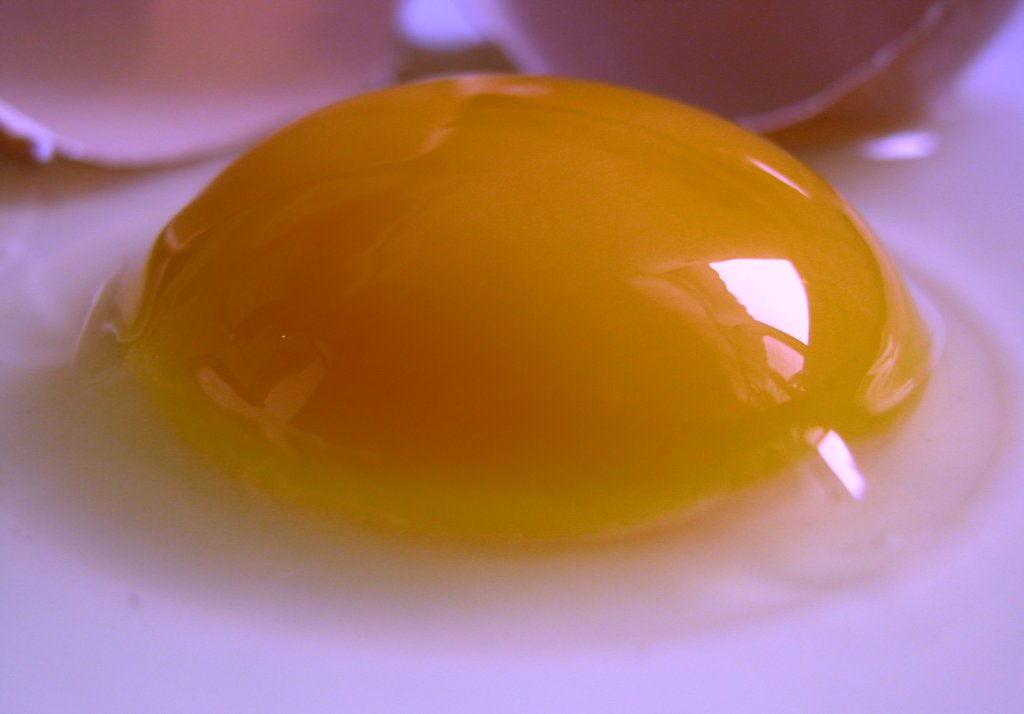
This is an egg yolk:


There's quite a difference! So after reading that sentence, I'm asking myself: did George RR Martin simply make an honest mistake, or does he really not know which is which? And what about the editor(s)? Could nobody avoid this? It might sound like I'm making too much of a fuss over this, but A Game of Thrones is a traditionally-published and widely acclaimed novel, and I was surprised to see the quality is much lower than I had expected.

But that's not all I've seen as I've plowed through the pages of this epic fantasy. Take A Storm of Swords, Part One: Steel and Snow. Here's the cover for the edition I bought:


Beautiful in its simplicity, isn't it? Well, it's anything but simple inside! Check it out! *Gasps!*


Can you see that bit right there? Yeah, there. In the middle. Page after page after page of errors! One right after another! Where was the editor when this was going on? Where was the proofreader? Wasn't there anybody on duty to stop this madness?

Here are some examples:

Page 80: A fire was crackling in the hearth, and sweet-swelling rushes had been scattered on the floor.

Page 211: If he should fall in the fight that must follow, the Wall would be safe for another hundred years, Jon judged. Andif not...

Page 262 -- This page marks the beginning of the folded middle section. The errors here are mainly formatting issues: incorrect paragraph indentation, and, above all, missing quotation marks. So many missing quotations marks!

Now here's where I stop, stare at the wall, and wonder.

As a soon-to-be indie author, I've done my homework. I've read Victorine Lieske's How to Find Success Selling Ebooks, and I'm currently reading Catherine Ryan Howard's Self-Printed: The Sane Person's Guide to Self-Publishing (excellent, by the way!). I've visited countless blogs owned by the most knowledgeable bloggers in the field. I've even (sort of) attended online conferences such as IndieReConI'm perfectly aware that I'm just starting out so I'm no writing--or publishing--wizard. I don't know much--but I do know this: every book that goes into print has to be the best it can be. Writers (especially if we're self publishing) have to:

Make the product stand out.
Make it worthwhile.
And for crying out loud, be professional.

This is why so many indie authors recommend hiring an editor to sort out any possible kinks in the manuscript. "Don't do it yourself" is our official mantra. "Check and double check" is our pre-publishing chant.

So what happened with George RR Martin's books? How come so many errors made it past all the pre-publishing stages?

I'm honestly wondering if anyone has the answer. After so many months of absorbing writing-related information like a sponge, it's surprising (at least for me) to find such a successful book...with so many mistakes. Or is the proportion of mistakes the same as other novels, and I just happened to catch them?

Is it okay to have these mistakes if the story is good? Are they forgivable and forgettable--even though they can pull several fickle readers (like me) out of the story? Are they easy to oversee because A Game of Thrones was traditionally published? Would the general public have a worse reaction if these same typos were in an indie book?

And finally: Is there someone I can write to and warn about the errors and maybe (in an idyllic world) have them proofread the books once more?

All comments are welcome. Happy writing!

Friday, March 1, 2013

Cool Tools for Writers: IVONA Recordings

WARNING: It turns out IVONA Recordings recently updated their website...and destroyed the wonderful free features I explain in this post. Instead of the online version, they now offer the free IVONA Minireader. You can save this program to your computer and download all the free voices. I still have to try it out, since the download is taking forever...

One of the best ways to check if your writing flows well is to hear your work out loud. You can read your own story out loud to yourself, or ask a friend or family member to do it for you.


Or...

You can grab a cup of tea, sit back, and have an online recording studio do the job!

Over the past two years, I've been searching and searching for the perfect (AKA: free) text to speech application. I found several, although the good ones were very limited. 

Many had natural-sounding voices, but only permitted up to a maximum of about one thousand words, while others managed any word count but only offered robotic and cringe-inducing voices.

Recently, thanks to a message on Critique Circle, I discovered IVONA Recordings. IVONA Recordings has no word limit whatsoever. You simply paste the text you want it to read, select the voice, and enjoy story time. It's absolutely free, although it does offer you the possibility to buy the recording for a not-so-modest fee.

I admit several voices are rather mechanical-sounding, but most are more than decent for a free program. What's more, you can use IVONA Recordings for different languages and accents: Castilian Spanish, British English, Welsh English, Welsh, American English, German, French, Canadian French, Italian, and several more. Each language option offers at least two speakers: one male and one female.

Overall, I believe IVONA Recordings is a reasonably good text to speech application--with a more than reasonable price! So if you'd like to know what your story sounds like, but are too tired to read it out loud, let IVONA Recordings do it for you!

This is probably the best text to speech application I've found, but I'm sure there are other great options out there. Do you have a favorite? Send me the name in the comments! Or maybe you don't think text to speech applications are a useful way to check the flow. You can also send me a comment! 

Thursday, February 14, 2013

Three Tips for Tweeps

It’s time for some more Twitter goodness! In previous posts, I tackled hashtags and offered you 30 Hashtags for Writers and 40 more Hashtags for Writers.

In this article, I want to give you three tips on using Twitter:

1)    Identifying Hashtags
2)    Tracking Hashtags
3)    Hooting Hashtags


Identifying Hashtags
 
Most hashtags are self-explanatory, such as #amwriting or #selfpub, but what happens when you don’t understand a hashtag? What the heck does #asmsg mean?
 
When in doubt, you can always refer to Tagdef. On this site, simply write in the unknown hashtag, and check the definition:
 
#asmsg is Authors' Social Media Support Group : A Talented Group of Independent Authors from Around the Globe Offering a Diverse Collection of Books.
 
You won’t find every single hashtag (for example, #WLC –World Literary Café—isn’t in the database), but it’s a good place to start. What’s more, if you know the meaning of a hashtag, you can always add it to the database and help out others.
 
Tracking Hashtags
 
Another great site to check out hashtags is Hashtags.org. But beware! Signing up is quite expensive for the humble writer (fees go from $49-349 a month). Nonetheless, that shouldn’t stop you from giving it a look. Snooping around, I found a little trick around the system. Just click this link for a taste of the free service (access to the demo is somewhat buried in the website). At the top of the page, you’ll see a search box with a giant hash symbol at the front. Simply type in your hashtag and watch the magic unfold.
 
Here’s an example. Let’s type in #asmsg. Remember that one? Author Social Media Support Group. Here’s what we get:
 
 
This is the 24-hour trend graph for this hashtag. It shows an approximation of how many times the hashtag has been used in the past 24 hours. As a paying customer, you can track hashtags over periods of 12 months (very useful for commercial purposes).
 
What’s so important about knowing when a hashtag is most prolific? It’s a sign of when people interested in that hashtag are using Twitter. If you want to, say, promote your blog about writing with the hashtag #writetip, it’s a good idea to check this graph to see when the hashtag is most used. It’ll probably have more chances of being seen with the #writetip community is at a peak.
 
The website offers three more delicious morsels:
 
 
As you can see in the image, even in the demo we get a short list of prolific users of that hashtag (in case you’d like to contact or follow any of them), part of a pie chart with other related hashtags (you have to upgrade to view half the chart, but still—it’s better than nothing), and a short list of recent tweets related to the hashtag you just looked up.
 
What to do with all this new information?
 
Hooting Hashtags
 
At first, I used just Twitter. Then, I went over to Tweetdeck so I could manage my tweets and schedule them for when I was away from the computer. However, I quickly left Tweetdeck because it was unreliable. I would spend several minutes organizing my tweets, leave, and hours later I’d find out not a single one of them had been sent. There wasn’t any apparent reason; the site just sometimes didn’t want to work.
 
My current recommendation is the social media management dashboard Hootsuite. It’s reliable, sturdy and intuitive. You can see all your streams in columns: Home Feed, Mentions, Scheduled Tweets, Direct Messages and Sent Tweets. I won’t delve into the intricacies of Hootsuite, but I will point out that it’s a great tool to manage your tweets.
 
At the top of the page, there’s a schedule button. Click it and you’ll get a very easy-to-use menu. Just write your tweet, select the time and date for it, and click schedule. The new tweet will appear in your Scheduled Tweets column.
 
 
The only drawback I see to Hootsuite is that the scheduling intervals run each five minutes. Options such as 10:48 aren’t possible, it’s either 10:45 or 10:50. This constraint gives the tweets a bit of an artificial flavor, but the application is still well worth the time.
 
So that’s it! With these three tools, I’m sure any tweep will be able to make the experience more valuable!
Related Posts Plugin for WordPress, Blogger...